
Main Body
Mines and Power in Colonial Cuba (Alma Alhamed)
Intro:
In 1511, Spanish conquistadors entered Cuba, and in their very first steps, they went in search of gold and silver, creating mining colonies under the patronage of Diego Velázquez. In the initial extraction, the island was firmly attached to Spain, where valuable metals were transported to Seville and Cádiz. But the Cuban mineral boom did not last long, as the silver industries of Mexico and Peru did. The deep deposits were also washed out within several decades, and the island needed to redefine its mission in the Spanish Empire (Rao, 2023). The shift of priorities of Spanish colonialism is demonstrated by the fact that by the eighteenth century, Cuba was transformed from a backwater mining frontier to a vital commercial and military hub.
1511:Early Gold Rush and Rapid Depletion
Cuba was characterized by gold mining in its initial colonial years (Costafreda et al., 2024). Velasco established mining towns such as Santiago de Cuba and Bayamo, where the encomienda system was applied to force the native Taiino population into labor. Placer mining was very strenuous and demanded few technologies because gold was found in alluvial deposits. Production increased rapidly, only to fall also rapidly. By the 1530s, the surface resources were depleted, the native population had been severely diminished, and a great many Spaniards had relocated to mining regions in Mexico and Peru, which were now more profitable. Cuba was not a long-term silver producer like Zacatecas, and its mineral resources were not long-term; the island had to restore its economic niche.
1540s–1700s Economic Reorientation and Strategic Importance
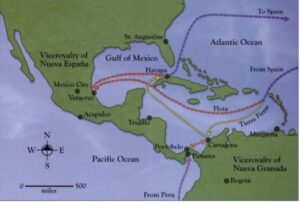
According to de la Fuent, as early as 1530-1540, most of the indigenous population and pre-existing gold deposits of Cuba were already exhausted, which is why most of the Spanish settlers left the southern colonies in favor of other more lucrative possibilities. Mineral wealth did not lead to the revival of the island, but its geography: its deep, sheltered bay of Havana afforded a perfect harbor, and which the crown and the imperial fleets turned into a great port (de la Fuente et al., 2008). This inherent geographical advantage enabled Havana to become the nexus of maritime commerce, ship repair, and fleet logistics, making Cuba cease to be an outpost of marginal mining and becoming a key station in the Atlantic imperial system of Spain. In the next decades, Havana was heavily fortified, shipyards and even commercial infrastructure were developed, and a wide range of Spaniards, Africans, and migrants contributed to the development of a thriving maritime economy, which preconditioned the further change in the economy.
from 1762–1763:British Occupation and Economic Transformation
Havana had become a principal objective during the Seven Years war on the basis of strategic and economic bases that had been built in the previous centuries that led to a brief British occupation (1762 – 1763). The British opened the port to external trade and increased the slave trade within less than a year and this led to introducing more slave labor than Spain had ever done, which preconditioned massive sugar plantations. The occupation highlighted the potential of the island beyond its primitive mining economy by building upon the structural benefits of Havana discussed by de la Fuentes such as its fortified harbor, shipyards and central importance in the Atlantic fleet system. When Spain recaptured power in 1763, the rulers introduced administrative changes and opened up trade to take advantage of Havana as an excellent maritime trade centre. It is a turning point in history as Cuba became a great plantation and commercial center incorporated into the world trade, maintaining its military and even strategic importance.
The Silver Peso Standard and Global Commerce 1770s–1790s
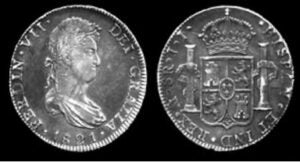
In the late eighteenth century, Cuba ceased to manufacture precious metals, but it was still critical to the world circulation of silver. The Spanish silver peso was recognized as the universal unit of international trade, which was popular in Europe, the Americas, the Middle East, and Asia. Ports in Cuba were important in this system. Mexican silver was brought into Havana, where the North American traders traded it for flour, lumber, and factory products and sent it to China, where the peso was highly valued due to its constancy of weight and fineness (Viera, 2014). The number of pesos sent to Canton between 1785 and 1833, through the American vessels, was above 157 million, of which a good part was in Cuban ports (Alejandra Irigoin, 2009). By the 1790s, Spanish American mints were issuing about 38 million pesos each year, 24 million of which were from Mexico alone, to sustain an ever-expanding globalized network of trade (Desaulty et al., 2011).
Conclusion
The transformation of Cuba into a gold-mining frontier and then into a major center of the Spanish imperial trade system reveals the versatility and the changeability of priorities of colonial rule. Initial expectations of mineral wealth were quickly replaced with the strategic location of the islands on water, which eventually helped it transform into a plantation agriculture and global trade hub. As Mexico and Peru continued to serve as the stable silver producers in the empire, Cuba proved that geography, military usefulness, and commercial connectedness could also provide value to colonialism (Lorini & Duccio Basosi, 2009). The fact that it had a shifting position between the sixteenth and the eighteenth centuries can be attributed to the wider trends in the process of empire-building in the early modern Atlantic world.
References
Alejandra Irigoin. (2009). The End of a Silver Era: The Consequences of the Breakdown of the Spanish Peso Standard in China and the United States, 1780s–1850s. Journal of World History, 20(2), 207–244. https://doi.org/10.1353/jwh.0.0053
Costafreda, J. L., Martín, D. A., Costafreda-Velázquez, J. L., & Parra, J. L. (2024). Gold Deposits Related to the Island Arc Formations and Ophiolitic Complexes of Eastern Cuba: A Review. Minerals, 14(5), 463–463. https://doi.org/10.3390/min14050463
De la Fuente, A., García del Pino, C., & Iglesias Delgado, B. (2008). Havana and the Atlantic in the Sixteenth Century. University of North Carolina Press
Desaulty, A.-M., Telouk, P., Albalat, E., & Albarède, F. (2011). Isotopic Ag–Cu–Pb record of silver circulation through 16th–18th century Spain. Proceedings of the National Academy of Sciences, 108(22), 9002–9007. https://doi.org/10.1073/pnas.1018210108
Lorini, A., & Duccio Basosi. (2009). Cuba in the World, the World in Cuba. In Padua Research Archive (University of Padua). University of Padua. https://doi.org/10.26530/oapen_356398
Rao, K. R. (2023). The Effects of Spanish Colonialism on the Cuban Revolution | Research Archive of Rising Scholars. Research-Archive.org. https://research-archive.org/index.php/rars/preprint/view/1525/version/1665
Viera, F. S. (2014). Port of Havana: The Gateway of Cuba, 1850–1920. Atlantic Ports and the First Globalisation, C. 1850–1930, 130–153. https://doi.org/10.1057/9781137327987_7