
Module 3 Reading – Informing Patients & Obtaining Consent
Ethics Case 3.2
Degrees of Disclosure
Ms. Nguyen, 34, has been experiencing intermittent upper abdominal pain, nausea, and bloating following meals for the past several months. After an ultrasound confirmed the presence of multiple gallstones, her primary care physician referred her to Dr. Webb, a general surgeon at Cleveland State Medical Center, a large university-affiliated teaching hospital. At her pre-operative appointment, Dr. Webb explains that Ms. Nguyen is a good candidate for a laparoscopic cholecystectomy which is a minimally invasive surgical procedure to remove her gallbladder.
During the pre-operative consultation, Dr. Webb takes time to explain that a laparoscopic cholecystectomy is performed under general anesthesia, typically lasting between one and two hours, where in the surgeon makes three to four small incisions in the abdomen. A thin camera called a laparoscope will be inserted through one incision, while specialized surgical instruments are inserted through the others, allowing the surgeon to identify the cystic duct and cystic artery, clip them to prevent leakage, and then detach and remove the gallbladder through one of the small incisions.
He notes that most patients can be discharged later that same day and are able to return to light activity within one to two weeks. Mild fatigue and soreness around the incision sites are common in the first few days. And some patients experience temporary loose stools or difficulty tolerating very fatty foods in the weeks following surgery, but these symptoms typically resolve on their own as the body adjusts.
Dr. Webb tells her that laparoscopic cholecystectomy is one of the most commonly performed and generally safe abdominal surgeries, and he thinks that removing her gallbladder is the best way to treat her condition. He also informs her that the most serious potential complication is injury to the common bile duct, the tube that carries bile from the liver to the small intestine, which occurs in approximately 0.3 to 0.5 percent of cases. Other risks include bleeding, infection at the incision sites, injury to nearby structures such as the intestine or blood vessels, adverse reactions to anesthesia, blood clots, and the rare possibility of bile leakage if clips on the cystic duct do not hold.
Ms. Nguyen asks if there are any reasonable alternatives to surgery, at which point Dr. Webb explains that the most common non-surgical option is watchful waiting and dietary modification, meaning the patient reduces their intake of high-fat foods while monitoring their symptoms without immediate intervention. However, he notes that this carries a risk of disease progression, including the possibility of acute cholecystitis (sudden gallbladder inflammation), choledocholithiasis (stones migrating into the bile duct), or pancreatitis, all of which are more serious and more difficult to treat than her current condition. Ms. Nguyen tells Dr. Webb that she would rather treat her condition now, rather than risk something worse happening down the road, and indicates that she wants to schedule the gallbladder surgery.
On the day of surgery, Ms. Nguyen arrives at the hospital and is taken through the standard pre-operative admissions process. A nurse reviews her medical history and allergies, places an IV line, and explains what to expect during and after the procedure. Ms. Nguyen is then asked to sign a multi-page hospital consent form. The consent packet, titled “Consent to Medical and Surgical Treatment,” primarily includes the information Dr. Webb had explained during their appointment as well as some additional technical details.
Toward the end of the informed consent packet there are some additional provisions containing broad language. One indicates her consent for “additional procedures as may be deemed necessary or advisable by the surgeon during the course of surgery.” The other is about Cleveland State Medical Center being a teaching institution and states that “medical students, residents, and other trainees may be present and involved in the patient’s care for educational purposes.” Ms. Nguyen reads through the forms, asks a few questions about the anesthesia and her expected recovery, and then signs the documents that were provided. After this she is taken to the operating room where anesthesia is administered and she loses consciousness.
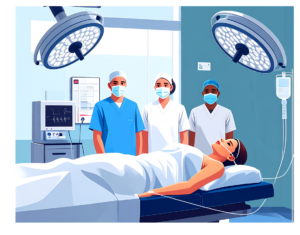 While Ms. Nguyen is under general anesthesia but before the cholecystectomy begins, Dr. Webb tells the three medical students who are observing in the operating room that they will now be practicing gynecological examinations on the patient. One of the students asks if this is required of them, to which Dr. Webb answers, “yes, this is standard practice in teaching hospitals and how 90% of medical students have learned to perform pelvic exams.” He then further explains that this is because using anesthetized patients provide for a quick and efficient learning opportunity, and it allows students to notice the subtle anatomical landmarks that can be more difficult to detect when the patient is awake and more tense.
Under Dr. Webb’s supervision, each medical student practices inserting a speculum and then proceeds to perform a pelvic examination on Ms. Nguyen by inserting two fingers into her vagina while lightly applying pressure to her abdomen to assess her reproductive organs. These student examinations are not recorded in the surgical notes or in Ms. Nguyen’s patient chart. Dr. Webb, then performs the cholecystectomy without complication, and Ms. Nguyen is taken to the recovery room. During the follow-up consultation, Ms. Nguyen mentions some pelvic discomfort she experienced in the immediate post-operative period. Dr. Webb then assesses Ms. Nguyen’s surgical incision site and tells her the recovery looks to be on track, but he does not mention the gynecological examinations by the medical students given that information not included in the patient’s chart is rarely discussed.