
Ostentatious and Ordinary: EAC Object Stories
John Todd Jr.
Metadata
Creator
Once Known Dine Creator
Date
Before 1937
Culture
Dine (Navajo), Southwest United States, Indigenous Native American
Medium
Silver, Turquoise
Measurements
Overall: 37.5cm (14 3/4in); Pendant: 7.6 x 5.8cm(3 x 2 5/16in)
Credit Line
The Cleveland Museum of Art, Gift of Amelia Elizabeth White, 1937.912
Description
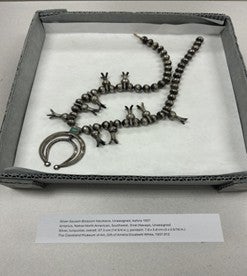
This Diné (Navajo) squash blossom necklace is made of silver beads and turquoise with a crescent-shaped pendant. Created in the American Southwest before 1937, the necklace reflects the tradition of Navajo silver working that developed through Indigenous craftsmanship and cultural exchange with Spanish colonial influences. Donated to the Cleveland Museum of Art by Amelia Elizabeth White, the necklace highlights both Native artistic traditions and skill, as well as the history of museum collecting. It can be used in teaching about Indigenous material culture, museum collections, and cross-cultural artistic influences.
Fun Fact
While this may seem like an expensive and rare piece of jewelry for the time, they were actually relatively common in Navajo communities. Necklaces and other jewelry could symbolize a multitude of ideas, such as identity, spirituality, or just a place in the community.
StoryMap
Interactive Activity
This activity was designed to go beyond memorization and instead encourage the students to think critically about the stories that historical objects can tell. Using this Navajo Squash Blossom Necklace, students are able to explore areas such as cultural exchange, collection and donating practices, and how individuals can shape the narrative of historical objects. As a future educator, I wanted to create something that students would see as useful and interactive, as well as give real meaning to the history behind it. Activities like this can demonstrate to students that history is not just about remembering names and dates, but rather about asking questions, making connections, and understanding multiple perspectives.
LINK TO BLOOKET: https://dashboard.blooket.com/set/69ef56243faa7ad75e9d316e