
Ostentatious and Ordinary: EAC Object Stories
Rwandan Woven Food Tray 1929.329
Christina Brister
Rwandan Woven Food Tray (click here)
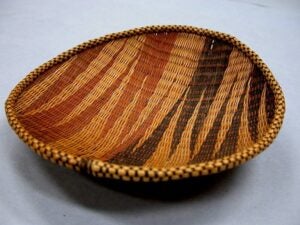
Image Credit: CMA, Education Art Collection (Object No. 1929.329)
Metadata
Creator
Once Known Tutsi Maker
Date
20th Century
Culture
Tutsi Culture, Rwanda, East Africa
Medium
Twined Plant Fiber
Measurements
Unknown
Credit Line
Cleveland Museum of Art, Gift of Gilpin Players of Karamu House
Description
Woven food tray created from twined plant fibers and produced in the early 20th century.
The tray also represents the craftsmanship and skill of Rwandan artisans. Basket weaving is a tradition that has been passed down through generations, requiring patience, precision, and creativity. Each tray is unique, with patterns and colors that can reflect regional styles or personal expression.
In addition to its traditional use, objects like this tray have gained global recognition and are now often used as decorative pieces. This shift shows how cultural items can move beyond their original purpose while still maintaining their significance. This tray is now apart of the Cleveland Museum of Art’s collection, where it is displayed as both a cultural artifact and a work of art.
Overall, this Rwandan food tray represents more than just a tool for serving food. It tells a story of culture, tradition, craftsmanship, and the importance of community.
Fun Fact
Woven trays and baskets are traditionally handmade using techniques passed down through generations and are widely recognized for their intricate design and cultural significance.
References:
Smithsonian Institution. (n.d.). African basketry and cultural traditions. https://www.si.edu
UNESCO. (n.d.). Traditional craftsmanship and intangible cultural heritage. https://ich.unesco.org
Cleveland Museum of Art. (n.d.). Collection and object information. https://www.clevelandart.org
Mosley, Whitney. 2025. “Traditional Peace Basket (Agaseke): Researched by Jonathan Kodner – Art History Virtual Exhibition.” Art History Virtual Exhibition. August 18, 2025. https://blogs.missouristate.edu/arthistory/traditional-peace-basket-agaseke-researched-by-jonathan-kodner-2/.
Biro, Yaëlle. 2011. “Tutsi Basketry.” Metmuseum.org. March 2011. http://www.metmuseum.org/toah/hd/tuts/hd_tuts.htm.
Otieno, Millicent. 2022. “The Meaning behind the Patterns on Rwandan Basketry.” Paulski Art . May 31, 2022. https://www.paulskiart.com/blogs/journal/the-meaning-behind-the-patterns-on-rwandan-basketry?srsltid=AfmBOoogcEFcnK-K92JgyktVo6jDZV0J5ccF2SQ6Avnu3ZUmAJoDbiYZ.
Erickson, Alicia. 2020. “Weaving to Peace: The History behind the Iconic Rwanda Peace Basket.” Wanderful – Blog. August 24, 2020. https://blog.sheswanderful.com/all-about-the-rwanda-peace-basket/.