
Ostentatious and Ordinary: EAC Object Stories
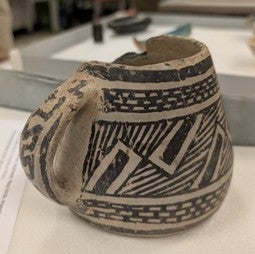
Mug 1200s 1937.894
Jaret S. Gold
Ancestral Puebloan Mug (1200s)
Metadata
Creator
Once known maker
Date
1200s
Culture
Ancestral Puebloans [1]
Medium
ceramic
Measurements
2 x 11.4 cm (4 x 4 ½ in.)
Credit Line
The Cleveland Museum of Art, Gift of Amelia Elizabeth White, 1937
Description
This mug, dating to the 1200s, comes from the Ancestral Puebloan culture of the American Southwest. It was likely made by one or more women, who traditionally practiced the art of making pottery. The mug is adorned with fine rectangular geometric decoration, typical of the Ancestral Puebloans. Collected by Amelia Elizabeth White of Santa Fe who donated it to the Cleveland Museum of Art in 1937. This mug demonstrates the artistic sensibilities of Indigenous Americans in everyday life.
Fun Fact
The oldest continuously inhabited settlement in the modern United States is the Acoma Pueblo, belonging to this culture. It is believed to have been permanently occupied for over 2,000 years.
Storymap
Timeline
Visit the ChronoFlo Timeline “History of the Ancestral Puebloans” Open in New Tab
[1] Modern Puebloan people generally consider the name “Anasazi” to be offensive. The word came from the Navajo, who arrived in the Southwest after the collapse of Chaco Canyon and Mesa Verde. Its etymology is disputed, but it is thought to mean something like “ancient enemy.” n.a. “What Does ‘Anasazi’ Mean, and Why is it Controversial?” Indian Pueblo Cultural Center. Accessed May 1, 2026. https://indianpueblo.org/what-does-anasazi-mean-and-why-is-it-controversial/