Main Body
14 CH 14 – Professional Development
Building Your Professional Edge
INTRODUCTION
Here is a true story.
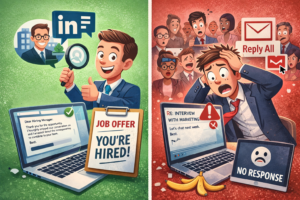
Two graduates applied for the same entry-level marketing job. Same GPA. Same major. Same university. One got the offer in 48 hours. The other never heard back.
The difference? Before the interview, one of them had researched the company, connected with an employee on LinkedIn, and sent a clean, professional follow-up email the same day. The other sent a reply-all email with a typo in the subject line.
Technical skills got them both the interview. Professional skills decided who got the job.
That is what this chapter is about. Not the textbook stuff, but the real-world skills that will actually get you hired, help you keep the job, and set you apart from everyone else who has the same degree.
Professional Development: Building Your Professional Edge
CHAPTER OUTLINE
- What is professional development and why it matters
- The relationship between personal growth and career success
- Growth mindset vs. fixed mindset in a business context
- First impressions and personal brand
- The role of reputation (online + offline)
2. Personal Branding (Your Career Identity)
- What is a personal brand?
- Identifying strengths, skills, weaknesses, and skill gaps
- Creating a consistent image (online + in person)
- Introduction to LinkedIn profiles
- Digital footprint: what employers actually look up
3. Communication Skills That Actually Matter
- Digital communication etiquette (Slack, Teams, email)
- Email etiquette
- Basic presentation skills
4. Networking (Without Making It Weird)
- What networking actually is (not just “schmoozing”)
- How to start a conversation professionally
- Building relationships with professors and classmates
- Basic workplace expectations
- Time management and meeting deadlines
- Reliability and accountability
- Teamwork and collaboration
- Handling conflict professionally
- Avoiding burnout and work-life balance
- Prioritization methods (Eisenhower Matrix, time blocking)
6. Career Exploration & Goal Setting
- Difference between a job, career, and calling
- Exploring industries and roles
- Internships and why they matter
- Reading job descriptions and industry trends
- The role of certifications and continuing education
- Workplace norms
- Workplace manners
- Virtual etiquette
- Social media boundaries
- Respect, inclusivity, and cultural awareness
- Why learning doesn’t stop after college
- Certifications, workshops, and upskilling
- Growth mindset vs. fixed mindset
- Building adaptability in a changing job market
- Staying current in a changing business environment
- Lifelong learning resources
- Adapting to technological change and AI in the workplace
- Building resilience and managing career setbacks
14.1 What Does “Professional” Even Mean?
If you asked most people to define “professional,” they would say something like wearing a suit, showing up on time, or body language.
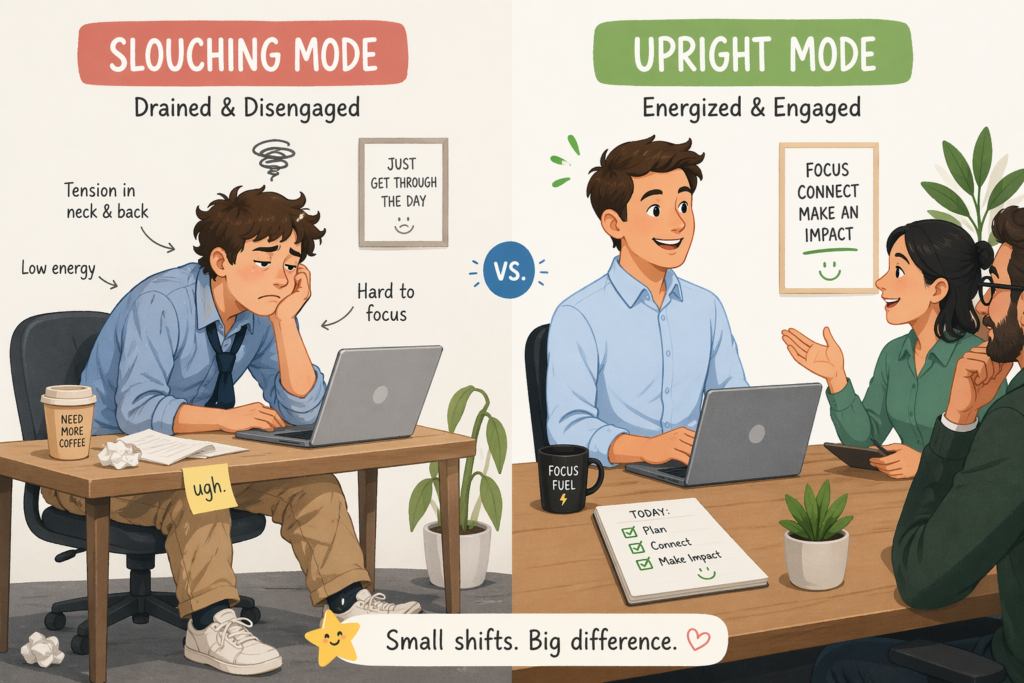
That is part of it, but it goes way deeper than that.
Being professional is really about how you show up, how people experience working with you, and the reputation you build over time. And here is the thing: you are already building that reputation. Right now. In class. In your group projects. Online. Every interaction is a data point.
First Impressions Are Fast
Research shows that people form a first impression in about seven seconds. That is before you have said a single word. Your eye contact, your handshake, your posture, how you are dressed for the context, it all adds up instantly. The good news is that you can control all of that.
Growth Mindset vs. Fixed Mindset
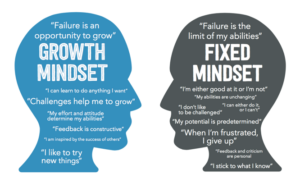
Psychologist Carol Dweck introduced a concept that is really useful here. A fixed mindset says: “I’m either good at this or I’m not.” A growth mindset says: “I can get better at this with practice.”
People with a growth mindset tend to take on challenges, ask for feedback, and keep improving. Those are exactly the traits employers talk about when they say they want someone who is “coachable” or “a fast learner.” That is not a personality type. It is a habit you can build.
Your Reputation: Online and Offline
Your professional reputation lives in two places. Offline, it is how your professors, classmates, coworkers, and supervisors would describe you if someone asked. Online, it is whatever shows up when someone Googles your name or looks you up on LinkedIn.
Spoiler: employers absolutely Google you. According to surveys, over 70% of employers check social media before making a hire. What are they looking for? Red flags. What do they want to see? Professionalism, personality, and proof that you are who you say you are.
14.2 Personal Branding
Your Career Identity
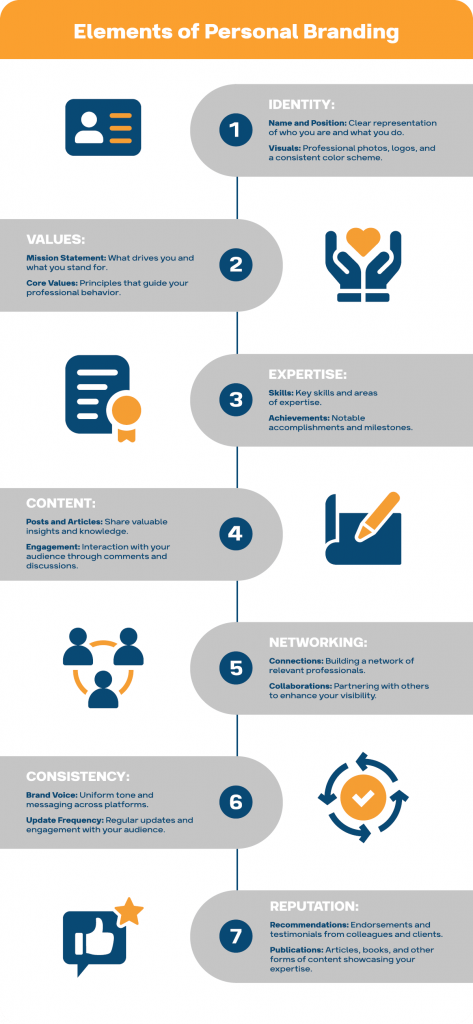
“Personal brand” sounds like something influencers talk about. But every single person has one, including you. Your personal brand is simply what people think of when they think of you professionally.
The only question is whether you are building it on purpose or leaving it to chance.
What Is Your Brand Right Now?
Think about how your closest friends or classmates would describe you in three words.
Now think about how a professor or work supervisor would describe you in three words.
Are they the same? Are they the words you would choose?
That gap between how others see you professionally and how you want to be seen is your personal branding opportunity.
Strengths, Skills, and Gaps
Before you can build a brand, you need to know what you are working with. Think through these three areas:
- Strengths: What do people come to you for? What do you do naturally well? (Consider taking the CliftonStrengths test by Gallup. It’s the gold standard for strengths identification; the full version costs money but the free preview is useful)
- Skills: What can you actually do? (Writing, Excel, public speaking, customer service, coding, etc.)
- Gaps: What do you struggle with? What would make you more hirable if you improved it?
Being honest with yourself here is not a weakness. It is the foundation of intentional growth.
LinkedIn: Your Digital Resume
If you do not have a LinkedIn profile yet, make one today. Seriously. LinkedIn is the professional world’s social media platform, and recruiters use it constantly. A complete profile with a professional photo, a short summary about who you are and what you are studying, and a list of relevant experiences and skills goes a long way. Move beyond “Student at X University.” (see: Weak vs Strong LinkedIn Profiles)
You do not need a long work history. You need a profile that shows you are a real, engaged person who is thinking about their career.
That already puts you ahead of a lot of your peers.
Your Digital Footprint
Everything you post publicly is part of your professional brand, whether you want it to be or not. This does not mean you have to delete all your social media or be boring online. It means being thoughtful. Would you be comfortable if a recruiter or your future boss saw this post?
A good rule of thumb: keep your private accounts private, clean up anything that could be misread, and let your LinkedIn do the professional talking.
“How to Build a Personal Brand” by Simon Sinek — his “Start With Why” concept translates perfectly to personal branding for students. Building a personal brand, he says, is about leading with your authentic purpose rather than your job title. The ultimate goal is to inspire trust and connection by being completely clear about why you do what you do.
14.3 Communication Skills That Actually Matter
Here is something nobody really teaches in high school: how to communicate like an adult in a professional setting. It is a bigger deal than you might think, and it trips up a lot of new graduates.
Email Etiquette
This one is huge.
Email is still the primary communication tool in most workplaces. And yet most people in their late teens and early 20s barely use it. That disconnect causes real problems when you enter the workforce.
A professional email has five things: a clear subject line, a greeting, a concise message, a polite sign-off, and your name.
That is it.
Here is what to avoid:
- No subject line, or a vague one like “Hey”
- Starting with “Hey” or nothing at all when writing to a professor or manager
- Walls of text with no line breaks
- Texting abbreviations (u, lol, ngl, etc.)
- Forgetting to attach what you said you were attaching
Example
Slack, Teams, and Messaging Platforms
More and more workplaces use tools like Slack or Microsoft Teams instead of email for day-to-day communication. The same professionalism rules apply, even if the format is more casual. Be clear, be concise, and respond in a reasonable amount of time. A message that sits unanswered for two days signals that you are disorganized or checked out.
Collaborate with kindness: Consider these etiquette tips in Slack | Slack
Presentation Skills
At some point in almost every job, you will have to present something to a group. Whether it is a team update, a pitch, or a training, the basics are the same: make eye contact, speak clearly, know your content, and do not read off your slides.
The biggest presentation mistake people make is underestimating how much practice actually changes your delivery. Someone who has run through a presentation three times out loud will always sound more confident and prepared than someone who just reviewed their slides the night before.
Here is a mindset shift that changes everything about how you present: it is not about you. The moment you stop thinking about how you are coming across and start thinking about what they need to walk away with, your presentation improves dramatically.
Before you build a single slide, ask yourself: Who is sitting in this room? What do they already know? What do they actually care about? What do I need them to understand or do when this is over? A presentation to your professor requires a different tone than a pitch to a client, which is completely different from a training session for new coworkers. Tailoring your delivery to your audience is not a bonus skill. It is the whole game.
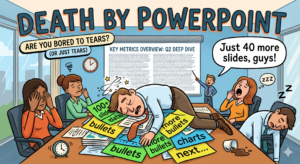
You have sat through it. Everyone has. Slide after slide of tiny bullet points, walls of text, and clip art that looks like it was made in 2003. That is “Death by PowerPoint,” and it is one of the fastest ways to lose a room. Reading your slides word for word is not a presentation. It is just reading out loud with extra steps.
The good news is that you do not have to be a designer or a creative person to make something that looks great. There are free tools built specifically for people who want professional, polished results without any design experience. Canva lets you build beautiful slides from pre-made templates in minutes. Prezi creates dynamic, zoomable presentations that feel completely different from a standard slideshow. Google Slides has improved dramatically and pairs well with add-ons. Some people are even using tools like Gamma to build AI-assisted decks that look genuinely impressive.
The medium you choose sends a message before you say a word. A clean, visually engaging deck signals that you took this seriously. A sloppy template with too much text signals the opposite. You have free tools, no-design-skills-required options, and zero excuses. Use them.
14.4 Networking (Without Making It Weird)
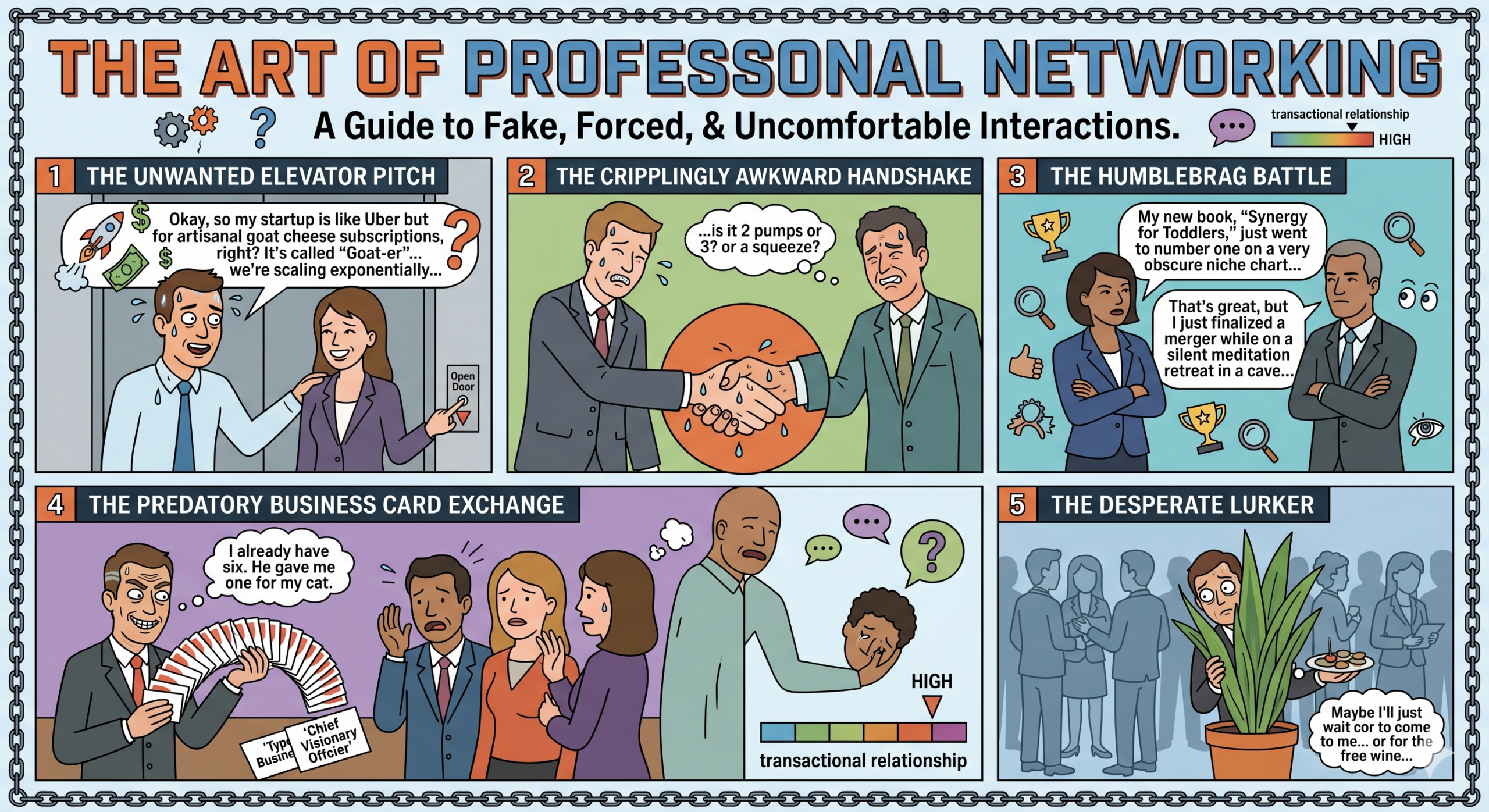
The word “networking” makes a lot of people cringe. It sounds fake, forced, and uncomfortable. That reaction makes sense if you picture it as walking up to strangers at a conference and handing out business cards. But real networking is just building genuine professional relationships over time.
What Networking Actually Is
Networking is just meeting people and staying in touch. It includes talking to your professors after class, connecting with a guest speaker on LinkedIn, reaching out to an alum from your school who works in your field, or even just making a good impression on your internship supervisor.
Most jobs are filled through connections before they are ever posted publicly. That is not a rumor. It is how hiring actually works. The earlier you start building your network, the better positioned you will be when you are ready to look for a job.
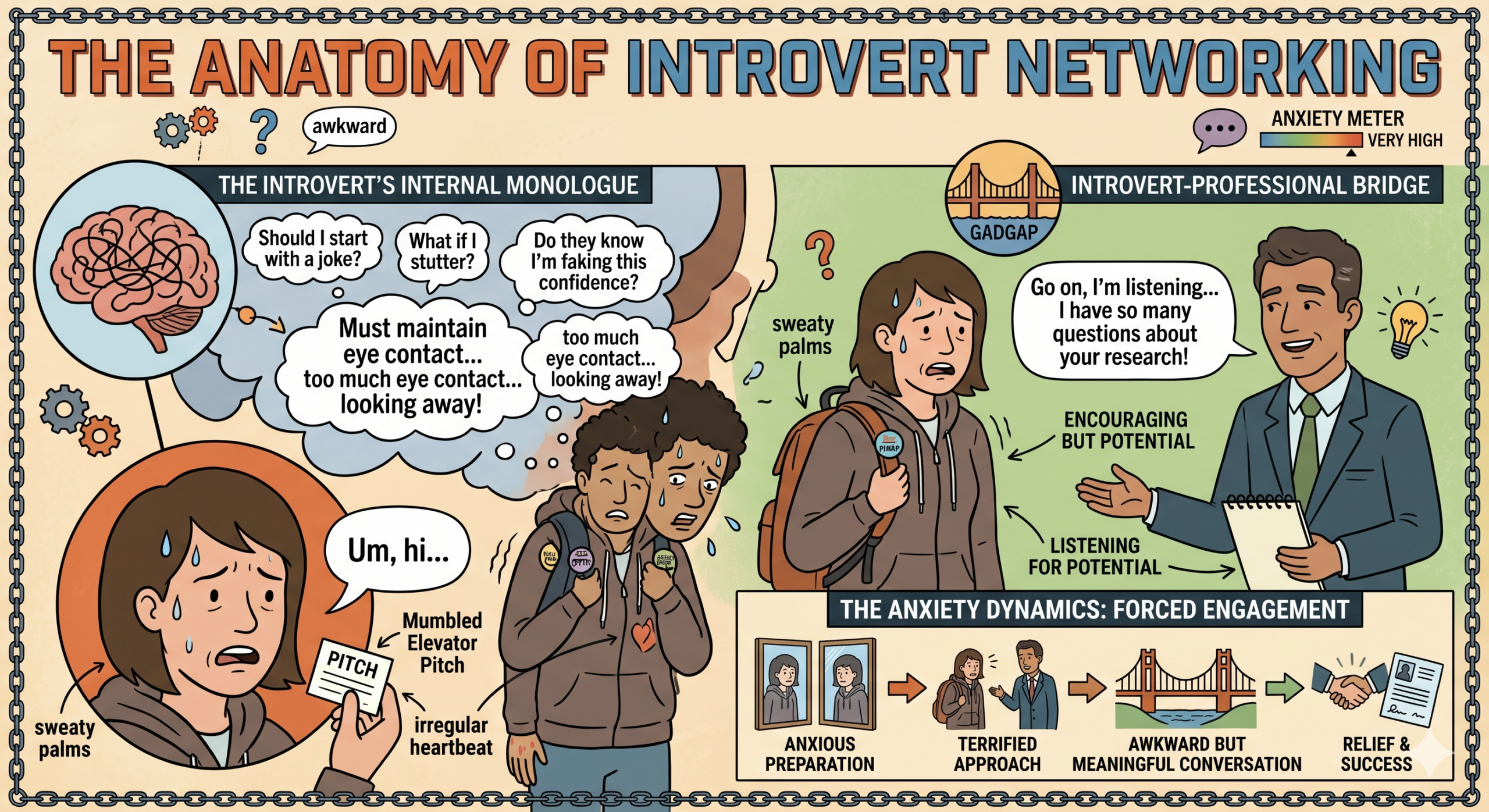
How to Start a Conversation
The easiest way to start a professional conversation is to ask a genuine question or make a relevant observation. People love to talk about their own work and experience. Some simple openers:
- “What do you enjoy most about working in this industry?”
- “I saw you worked at [Company]. What was that experience like?”
- “I am studying business and trying to figure out which direction to go. Any advice?”
You do not have to be charming or extroverted. You just have to be curious and respectful.
Start With the Network You Already Have
You already know people who can help you professionally. Your professors have industry connections and can write you strong recommendation letters. Your classmates will be your future colleagues, clients, and maybe even your bosses someday. That group project partner who is really organized? Stay in touch.Treat every professional relationship like it matters, because it does.
14.5 Workplace Skills & Habits
Landing the job is one thing. Actually thriving in a professional environment is another. The good news is that the habits that make someone great at their job are mostly learnable.
Here is what actually matters once you are in the door.
Reliability and Accountability
If you say you are going to do something, do it. If you say you will have it done by Thursday, have it done by Thursday. If something goes wrong and you cannot, communicate that early, not at the deadline. This sounds obvious, but it is one of the most common complaints managers have about young employees.
Accountability also means owning your mistakes. Everyone messes up at work. What separates people is whether they acknowledge it, fix it, and learn from it, or make excuses and blame someone else.
Time Management
In college, you can procrastinate and pull an all-nighter and maybe get away with it. In the workplace, that catches up to you fast. Here are two tools that actually work: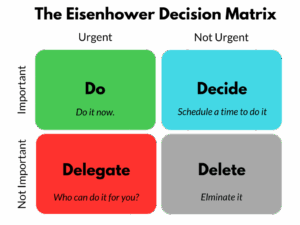
- The Eisenhower Matrix: Sort tasks into four boxes: Urgent + Important (do it now), Important but not urgent (schedule it), Urgent but not important (delegate it), and neither (drop it). This one simple framework can completely change how you prioritize your day.
- Time blocking: Instead of a to-do list, block specific times on your calendar for specific tasks. Treat those blocks like meetings you cannot cancel.
Teamwork and Collaboration
Almost every job involves working with other people. And working well with others is a genuine skill, not just a personality trait. It includes listening without interrupting, contributing your share, giving credit to teammates, and knowing when to lead versus when to follow (see sidebar).
In group projects, the person who quietly keeps things organized, communicates clearly, and delivers on time is often more valuable to a team than the loudest, most “creative” voice in the room.
Handling Conflict Professionally
In the Season 2 episode of The Office literally titled “Conflict Resolution,” Michael Scott pulls out a binder of unresolved employee complaints and attempts to mediate them one by one with predictably disastrous results. It is a perfect (and hilarious) reminder that conflict at work is inevitable. The question is never whether it will happen. It is how you handle it when it does.
The general rule: address it directly and privately before you involve others, keep it about the situation rather than the person, and stay calm. “I want to talk about the project because I felt like my contributions were not fully acknowledged” is a professional conversation. Venting to everyone in the office is not.
Avoiding Burnout
This might seem like an unusual topic for a business class, but burnout is a serious issue in professional environments. It happens when you overwork yourself for too long without recovery. The symptoms include exhaustion, cynicism, and declining performance.
Set boundaries where you can. Take your lunch break. Use your vacation days. Ask for help when you need it.Sustainable performance over a long career is more valuable than burning yourself out in two years trying to prove something.
14.6 Career Exploration & Goal Setting
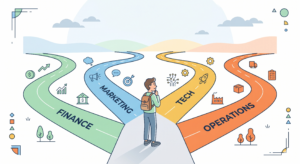
One of the most common things first-year business students say is “I don’t really know what I want to do yet.” That is completely fine. But the sooner you start actively exploring, the more confident you will feel and the better your decisions will be.
Job vs. Career vs. Calling
These three words get used interchangeably, but they mean different things:
- A job is work you do primarily to earn money. It might not connect to your bigger goals.
- A career is a progression of jobs and experiences in a related field, building toward something.
- A calling is work that feels meaningful and aligns with who you are and what you value.
You probably will not find your calling in your first job, and that is okay. What matters is being intentional. Every job teaches you something. Ask yourself what you are learning, what energizes you, and what drains you.
Exploring Industries and Roles
Business is a broad field. Finance, marketing, human resources, operations, supply chain, entrepreneurship, consulting… the options can feel overwhelming. A good way to start narrowing it down is through informational interviews, which are just casual conversations with people working in fields you are curious about.
Reach out to an alum, a professor’s contact, or even someone on LinkedIn with a short message: “I am a first-year business student, and I am really interested in learning about your work in [field]. Would you be open to a quick call?” Most people say yes.
Why Internships Matter
An internship is not just a line on your resume. It is a chance to try out an industry before you commit to it, to build real professional skills, to make connections, and often to get a job offer. Start thinking about internships early, even in your first year. Many programs recruit months in advance.
Goal Setting That Works
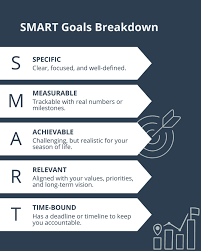
Goals without a plan are just wishes. Use the SMART framework: Specific, Measurable, Achievable, Relevant, and Time-bound. Instead of “I want a good job,” try “By the end of sophomore year, I want to have completed at least one internship in a marketing or communications role.” That is a goal you can actually work toward.
Try This: Write down three professional goals for this semester. One small habit (like checking LinkedIn twice a week). One skill-building goal (like getting better at public speaking). One relationship goal (like getting to know one professor well enough to ask for a recommendation).Small steps, real results.
Reading Job Descriptions and Industry Trends
Most students do not look at job postings until they need one. Start earlier than that. Reading job descriptions in fields you are curious about is one of the fastest ways to figure out what skills and experiences employers actually want, not just what sounds good in a course catalog. Look at five postings for a role you think you might want someday. What keeps showing up? What do you not have yet? That gap is your roadmap.
Industry trends are worth paying attention to too. Every field has trade publications, newsletters, and LinkedIn thought leaders who talk about where things are heading. You do not need to spend hours on this. Even a 10-minute weekly scan of what is happening in your industry of interest keeps you informed and gives you something intelligent to say in an interview when they ask, “So, what do you know about our industry right now?”
The Role of Certifications and Continuing Education
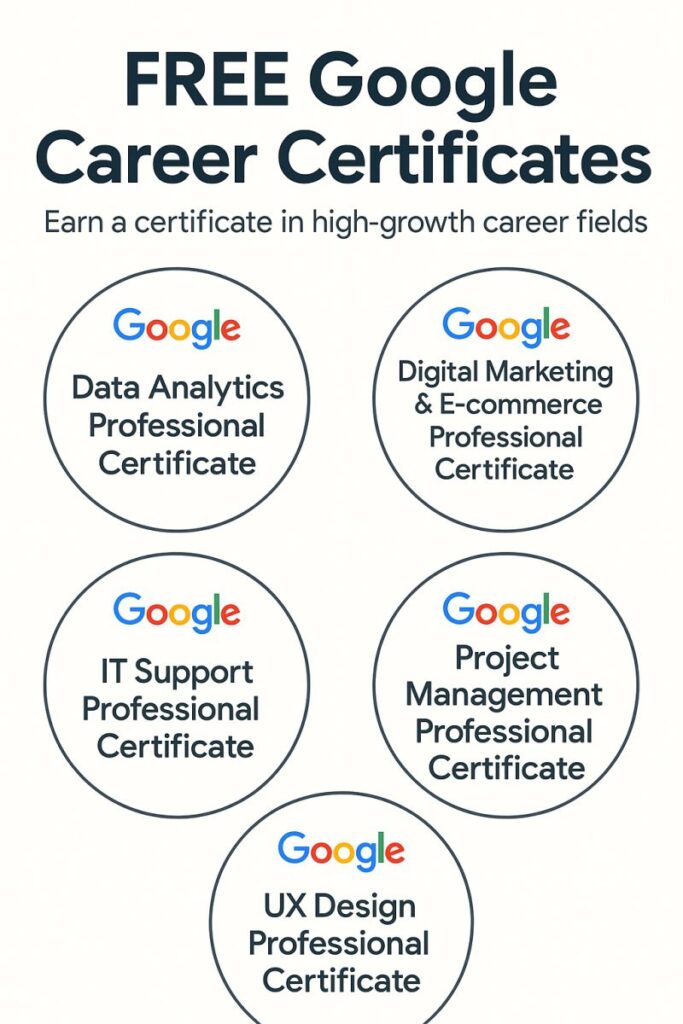
Your degree is the foundation, but it is not the whole house. In a lot of industries, certifications signal to employers that you have specific, current, job-ready skills that a general business degree does not always prove. The good news is that many of the most valuable ones are free or very affordable and can be earned in a few hours or days.
Google offers free certifications in digital marketing and data analytics. HubSpot has free courses in marketing, sales, and content strategy. LinkedIn Learning is often free through your university library. These are not throwaway credentials. Recruiters recognize them, and they show initiative, which is exactly the kind of thing that makes a resume stand out when you do not have a lot of work experience yet.
The earlier you start stacking small credentials alongside your degree, the stronger your resume looks by graduation. Think of it as building your professional toolkit one tool at a time.
14.7 Professional Etiquette
Etiquette is just the unwritten rules of professional behavior.
Nobody is going to hand you a list of these rules at your first job. You are expected to already know them. Here is a head start.
In Meetings
Arrive on time (or one to two minutes early). Have a notepad or your laptop ready. Do not scroll your phone. Listen actively. When you have something to add, do not interrupt; wait for a natural pause. Follow up on any action items you committed to.
Virtual Meetings (Zoom and Teams)
Virtual meetings have their own etiquette layer. Show up on time. Mute yourself when you are not speaking. Look at the camera, not at your own face on the screen. Have a clean, appropriate background. Dress from at least the waist up as you would in person. Yes, people have been caught in embarrassing situations by forgetting that last rule.
Dress Codes
When in doubt, dress one level up from what you think is expected. Business casual is not jeans and a hoodie. Business professional means a suit or equivalent. If you are unsure about the dress code for an interview or event, it is completely okay to ask. “Could you tell me what the dress code will be for the interview?” is a totally professional question.
Social Media Boundaries
Once you are employed somewhere, be thoughtful about what you post related to your employer. Do not share confidential information. Do not vent about your boss or coworkers publicly. Do not post things that could reflect badly on your company or your team. A good rule of thumb: if you would not say it in a meeting, do not post it.
Respect, Inclusion, and Cultural Awareness
Today’s workplaces are diverse, and the best professionals know how to work well with people from different backgrounds, cultures, and life experiences. This means actively listening without making assumptions, being open to perspectives different from your own, using inclusive language, and treating every colleague with basic dignity regardless of their role or title.
This is not just the right thing to do. It is a professional skill that organizations actively look for and reward.
14.8 Lifelong Learning & Growth
Here is something that might feel counterintuitive to hear at the start of your college career: graduation is not the finish line. In most industries, the knowledge and skills you have when you graduate will start becoming outdated within a few years. The professionals who thrive long-term are the ones who never stop learning.
The Changing World of Work
Artificial intelligence is already changing what jobs look like. Entire roles are being automated. New roles are being created that did not exist five years ago. No one knows exactly what the job market will look like in 10 or 20 years, but one thing is consistent across every era of change: the people who adapt, learn, and stay curious keep moving forward. The ones who rely only on what they already know get left behind.
Ways to Keep Growing
You do not have to go back to school to keep learning. There are a lot of options:
- Online courses: Platforms like Coursera, LinkedIn Learning, and Google Career Certificates offer legitimate, affordable credentials in everything from data analytics to project management to digital marketing.
- Certifications: Many industries have professional certifications that signal expertise. In finance, there is the CFA. In project management, the PMP. In marketing, Google and HubSpot offer free certifications that employers actually recognize.
- Conferences and professional associations: Almost every industry has organizations you can join as a student, often for free or at reduced cost. These are great for staying current and meeting people.
- Reading: The best professionals in almost any field are consistent readers. Industry newsletters, books, podcasts. Even 15 minutes a day adds up significantly over time.
Building Resilience
Your career will not be a straight line. You will get rejected from jobs you really wanted. You will have a bad boss at some point. You might get laid off. You might realize you are in the wrong field and need to pivot. All of that is completely normal.
Resilience is not about pretending these things do not hurt. It is about knowing that setbacks are temporary and that every experience, good or bad, is teaching you something. The professionals who last the longest are not the ones who never failed. They are the ones who kept going.
Closing
Remember those two graduates at the beginning? Same degree, completely different outcomes. One of them did not have better grades. They had better professional habits.
The skills in this module are not complicated. They are not things that require a certain personality type or a ton of experience. They require awareness, intention, and practice. And the fact that you are learning them now while in college means you are already ahead.
Your degree will open doors. But how you carry yourself, communicate, build relationships, and show up every day is what will determine what happens once you walk through them.
Start now. Start small. Start building your professional edge.