Main Body
9 CH 9 – Marketing
Introduction
You follow your favorite creator on Instagram. You wear a certain brand of shoes. You have a go-to fast food order you never switch from. None of that happened by accident. Someone planned it. That’s what this chapter is about.
By the time you turn 18, you’ve already seen an estimated 40 million ads. You’ve been marketed to your entire life. This chapter is your chance to finally understand how it works and why it works on you.
Marketing is basically how businesses get your attention, convince you something is worth your money, and keep you coming back. It’s not just ads. It’s everything from TikTok trends to packaging to how easy it is to check out online.
Chapter Summary
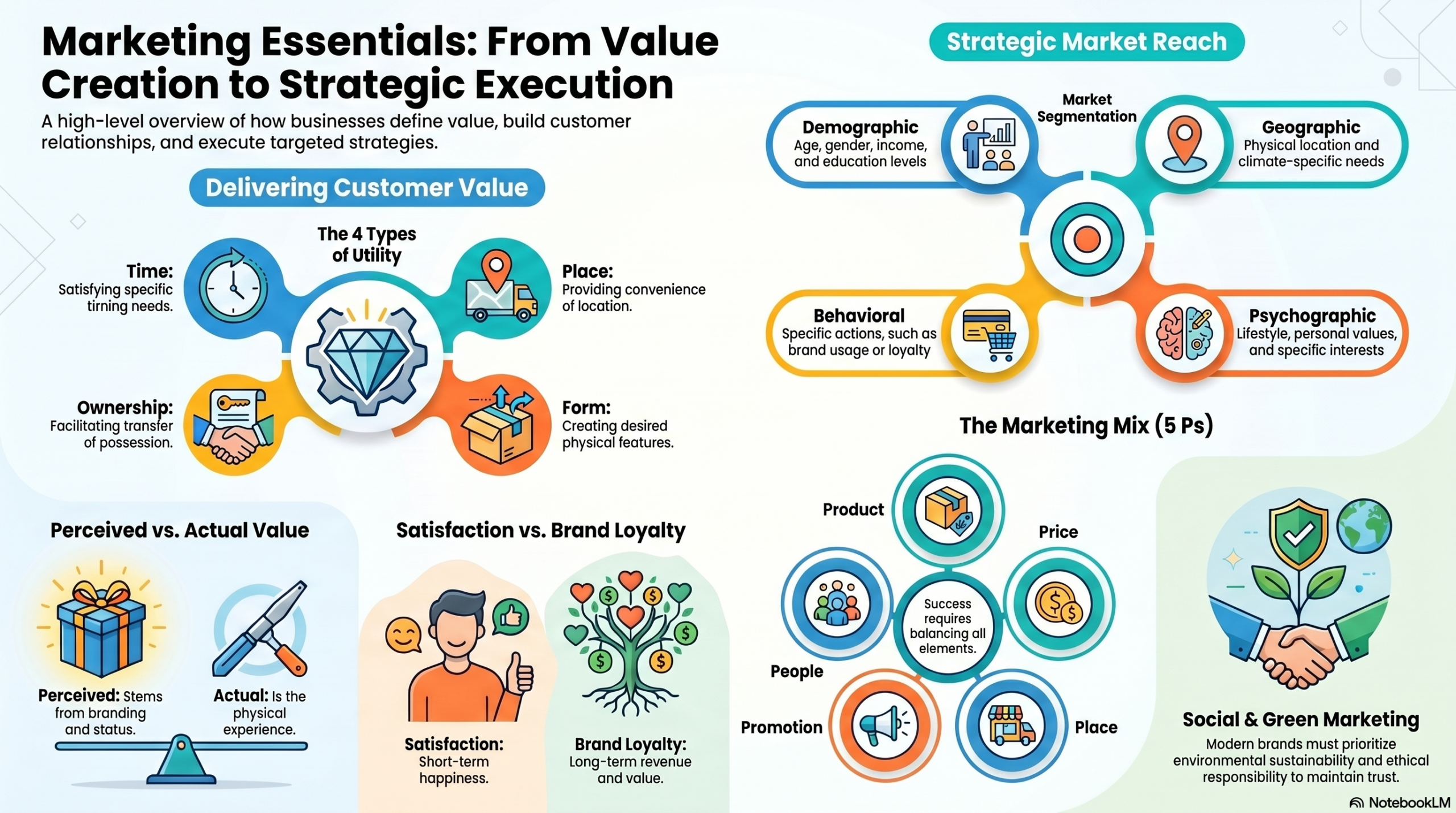
Marketing is how businesses connect products with people. It starts with understanding your customer, figuring out what they value, and then building a plan to reach them. From segmenting the market to crafting the right mix of product, price, place, promotion, and people, every piece of marketing works together toward one goal: building real, lasting relationships with customers.
As the world changes, marketing changes with it. Sustainability, social responsibility, and digital platforms are reshaping how brands communicate. Understanding these fundamentals gives you a foundation for navigating any industry you end up in.
Chapter Outline
9.1: What Is Marketing? – Definition, types, and goals
9.2: Utility in Marketing – The four types of value
9.3: Customer Relationships – CRM, satisfaction, and loyalty
9.4: Value: Perceived vs. Actual – What customers think vs. what they get
9.5: The Marketing Plan – What it is and how to build one
9.6: Market Segmentation – Finding and grouping your customers
9.7: The Marketing Mix (5 Ps) – Product, Price, Place, Promotion, People
9.8: Marketing and Society – Social responsibility and green marketing
9.1: What Is Marketing?
Marketing is how a business gets people interested in what it sells. It covers everything from figuring out who your customers are, to promoting your product, to making sure it gets delivered. But the real goal of marketing is bigger than just making a sale. It’s about building lasting relationships with customers.
There are four main types of marketing, depending on what you’re promoting:
- People Marketing: Promoting a person to build their image or brand. Think of how athletes like LeBron James or influencers on TikTok market themselves to get sponsorships and followers.
- Place Marketing: Getting people to visit or move to a location. Cities like New York run “I Love NY” campaigns to attract tourists.
- Event Marketing: Promoting a specific event to get people to show up. Coachella and the Super Bowl are massive examples of event marketing done right.
- Idea Marketing: Promoting a cause or belief. Anti-smoking campaigns, climate awareness ads, and even “wear a seatbelt” messages are all idea marketing.
9.2: Utility in Marketing
In marketing, utility means the value a product gives to a customer. Basically: how well does it satisfy a need?
There are four types:
- Time Utility: The product is available when you need it. Pumpkin spice lattes in the fall, holiday gift bundles in December. These are examples of time utility.
- Place Utility: The product is easy to find and buy. Having DoorDash or a store right on your route home adds place utility.
- Ownership Utility: It’s easy to actually purchase the product. Buy now, pay later options (like Afterpay or Klarna) are a perfect example.
- Form Utility: The product is designed in a way that meets your needs. A phone with a great camera for content creators, or a gaming chair with lumbar support for long sessions.
When marketers understand utility, they can position their products as genuinely useful, not just flashy.
9.3: Customer Relationships
Customer Relationship Management (CRM) is all about staying connected to your customers and keeping them happy long-term. It’s one of the most important parts of modern marketing.
Customer Satisfaction vs. Customer Loyalty
These two things sound similar, but they mean different things:
Customer satisfaction is how happy someone is after a single experience. You ordered a burrito, it was great. You’re satisfied.
Customer loyalty is when someone keeps coming back to a brand over and over again. That person who goes to Chipotle three times a week, no matter what, is loyal.
Loyalty is harder to earn but way more valuable. A loyal customer keeps spending money with you, forgives you when you mess up, and tells their friends about you.
The Two Big Mistakes
Marketers often fall into two traps with customers:
- Overpromising: Hyping up a product so much that it can’t live up to expectations. Think of any product ad where the real thing looked nothing like the picture.
- Underpromising: Playing it so safe that you don’t get anyone excited.
The sweet spot is being honest about what your product delivers and then delivering it consistently.
9.4: Value: Perceived vs. Actual
Value is simple: it’s the benefit a customer gets compared to what they paid. But there’s a difference between what customers think they’re getting and what they actually get.
Perceived value is based on things like branding, packaging, reputation, and hype. It’s what you believe before you even try the product.
Actual value is what you experience once you use it. Does it actually do what you paid for?
*Perceived Value is a subjective perception, whereas real value is established through actual engagement with a product; reflecting the actual worth.
Example: iPhone vs. Android
Most people think the iPhone is premium and worth every penny. That’s perceived value. Apple has nailed branding, design, and status. But when you look at specs, many Android phones offer the same or better features for less money. The actual value might be equal, but perceived value is sky high for Apple.
Example: Designer Bags
The average new handbag in the US costs about $313. The average woman actually spends around $160. But luxury brands charge thousands, and some bags go for $10,000 to $32,000. Why do people pay that? Pure perceived value. The brand name, the exclusivity, and the social status of carrying it. The stitching isn’t worth $32,000. The feeling of owning it is.
9.5 The Marketing Plan
A marketing plan is a written strategy that lays out how a business will reach its customers. Think of it like a game plan before a big match.
A solid marketing plan includes:
- Market Research: Understanding your customers and the competition. Who’s buying, what do they want, who else is selling it?
- Target Audience: Defining exactly who you’re trying to reach.
- Goals: What do you want to achieve? More sales? More followers? More sign-ups?
- Strategies and Tactics: How are you going to do it? Ads, social media, influencer deals?
- Budget and Timeline: How much money and how much time do you have?
- Performance Tracking: How will you know if it worked?
Marketing plans are usually built by a team that includes marketing managers, sales staff, and sometimes even finance and customer service. In a small business, it might just be one person wearing all those hats.
Why does it matter? A marketing plan keeps everyone on the same page. Without one, you’re just guessing.
EXAMPLE
Imagine a shoe company. They use:
- Demographic segmentation to push trendy styles to teens
- Geographic segmentation to sell waterproof styles in rainy cities
- Psychographic segmentation to market high-performance shoes to gym-goers
- Behavioral segmentation to run ads targeting competitive runners vs. casual walkers
One product, four very different conversations with customers.
9.6 Market Segmentation
Not everyone wants the same thing. Market segmentation is the process of dividing potential customers into groups based on shared traits, so you can speak directly to what each group actually cares about.
There are four main ways to segment a market:
Demographic Segmentation: Based on age, gender, income, education.
Example: A gaming company targets teens and young adults differently than it targets parents buying gifts.
Geographic Segmentation: Based on location.
Example: A company selling winter coats focuses more on customers in Minnesota than customers in Miami.
Psychographic Segmentation: Based on lifestyle, values, and interests.
Example: A wellness brand markets to people who care about their health and mental well-being.
Behavioral Segmentation: Based on how people act.
Example: Spotify rewards users who upgrade to premium, targeting them differently than free users.
9.7 The Marketing Mix
The marketing mix is the combination of tools a business uses to promote a product. You might have heard of the 4 Ps, but the updated version includes a fifth.
- Product: What are you actually selling? This includes the features, quality, design, and what makes it different. Example: Nike sells shoes, but really they sell performance and style.
- Price: What does it cost? Pricing has to feel fair for the value it delivers. Price too high, people pass. Price too low, and people might think it’s low quality.
- Place: Where can people buy it? In a store, on a website, through an app? Getting the product to the right people, in the right place, at the right time is the whole challenge here.
- Promotion: How do you get the word out? This includes advertising, influencer deals, social media, email campaigns, and more.
- People: The staff, customer service, and anyone who interacts with the customer. A great product with terrible customer service will still lose customers.
GOING GLOBAL
When a brand expands to another country, they have to rethink the entire marketing mix. What works in the US might not land in Japan or Brazil. Prices, promotions, even the product itself might need to change.
9.8 Marketing and Society
Marketing doesn’t exist in a vacuum. Over the past few decades, people have started demanding that businesses do more than just make money. They want companies to be responsible. That’s where green marketing comes in.
Green Marketing
Green marketing is when a company promotes its products or services as environmentally friendly. This includes things like using sustainable materials, cutting down on packaging, or supporting climate causes.
Brands like Patagonia are built almost entirely on this idea. They make outdoor gear and loudly promote environmental activism as part of their brand identity. And it works because their customers genuinely care about the planet.
But there’s a flip side: greenwashing. That’s when a brand pretends to be eco-friendly without actually making meaningful changes. Customers, especially younger ones, are getting better at spotting this.
Jobs in Green Marketing
This space is growing, and there are real careers in it:
- Sustainability Marketing Specialist: Builds campaigns around eco-friendly messaging
- Environmental Product Manager: Designs and promotes green products
- CSR Manager: Oversees a company’s environmental and ethical commitments
- Green Brand Strategist: Shapes a brand’s eco-friendly identity
- Content Creator for Green Brands: Creates posts, videos, and articles for environmentally focused companies
Closing Notes
You started this chapter as a consumer. You finish it as someone who understands the game. Next time you reach for a product, notice the price, the packaging, the placement, and the story being told. Marketing is everywhere. Now you can see it.
Every brand you love had a strategy behind it. Every ad that made you laugh, feel something, or pull out your wallet was built on the concepts in this chapter. Whether you end up in business, art, tech, or something else entirely, knowing how marketing works will make you sharper in all of it.
EXTRA LEARNING RESOURCES