Main Body
6 CH 6 – Economics
Introduction
Why Everything Costs So Much and Who Decided That
You are standing in line for a concert. The ticket face value was $85. By the time you checked out on Ticketmaster, it was $200. By the time you looked on StubHub the night of the show, someone was asking $450 for the same seat.
Nothing about the concert changed. Same artist. Same venue. Same seat. So why did the price triple?
Or think about this. Gas prices were relatively stable for months, then one week they jumped 40 cents overnight. Nobody announced a shortage. Nobody warned you. It just happened.
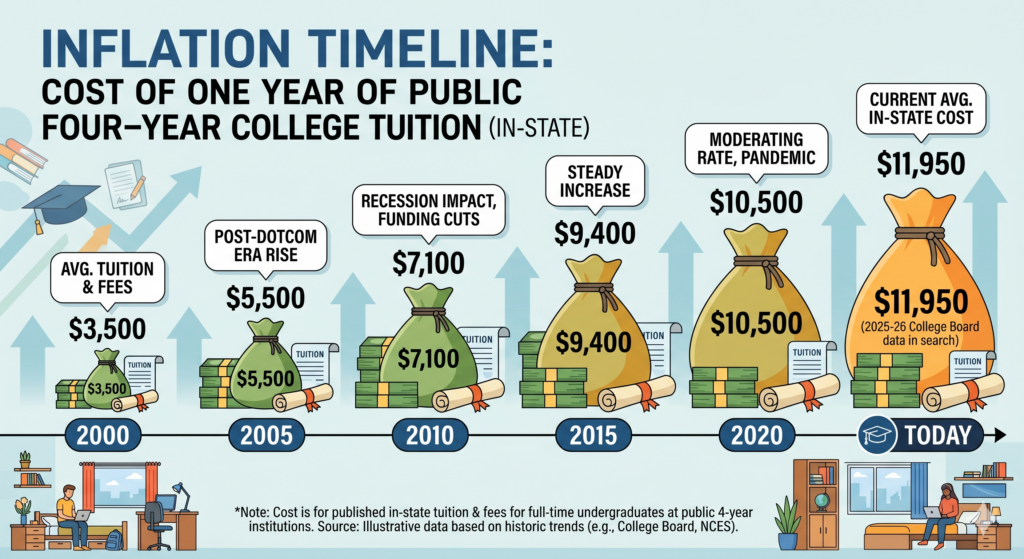
Or this one. Your parents tell you they paid $400 a semester for college. You are paying 20 times that. The buildings are the same. The professors are still just people standing at the front of a room talking. So, what happened?
These are not random events. They are economics in action. And once you understand the forces behind them, the world starts to make a whole lot more sense.
Economics is not just a class you have to pass. It is the invisible rulebook that governs every price tag, every job market, every financial decision you will ever make. Understanding it does not just make you a better student. It makes you a smarter consumer, a more informed citizen, and honestly, just a person who is harder to rip off.
Let’s get into it.
CHAPTER OUTLINE
6.1: What Is Economics and Why Should You Care?
Microeconomics vs. Macroeconomics
6.2: Scarcity and Trade-offs: The Foundation of Everything
Unlimited wants, limited resources
Trade-offs and opportunity cost
6.3:. Supply and Demand: The Engine of the Economy
Driving factors of Supply / Demand
Equilibrium
6.4: Types of Economic Systems
Command Economy, Market Economy, Mixed Economy
6.5: Competition and Market Structures
Perfect competition, monopoly, oligopoly, monopolistic competition
6.6: The Role of Government in the Economy
Why governments get involved
Taxes, regulations, and public goods
Brief intro to fiscal policy: government spending and taxation
6.7: Macroeconomics: The Big Picture
GDP: what it is and why it matters
Unemployment: types and what they mean
Inflation: what it is, why it happens, and why your dollar buys less than it used to
6.8: Personal Economics: What This Means for You
How economic principles show up in your everyday financial decisions
Budgeting as an economic choice
Interest rates, student loans, and the cost of borrowing
Why understanding economics makes you a smarter consumer, worker, and citizen
6.1: What Is Economics and Why Should You Care?
Here is the simplest definition of economics you will ever hear: economics is the study of how people make choices when they cannot have everything they want.
That is it. At its core, economics is not really about money. It is about decisions. How do individuals decide what to buy? How do businesses decide what to charge? How do governments decide where to spend? Every one of those questions is an economics question, and they all connect back to the same fundamental problem: there is never enough of everything to go around.
Economics breaks down into two main branches, and understanding the difference between them will help you make sense of everything that follows.
Side by Side Comparison
| Microeconomics | Macroeconomics |
|---|---|
| Focuses on individuals, households, and businesses | Focuses on entire economies and countries |
| Why does a coffee cost $7 at one place and $2 at another? | Why is inflation rising across the whole country? |
| How does your college decide what to charge for tuition? | What is the national unemployment rate? |
| Should you take the job or stay in school? | How does a recession affect millions of workers? |
Microeconomics zooms in. It looks at the individual decisions made by people, households, and businesses. When you decide whether to cook at home or order DoorDash, that is a microeconomic decision. When a local coffee shop decides whether to raise its prices, that is microeconomics. When Nike figures out how many pairs of a limited sneaker to produce, that is microeconomics.
Macroeconomics zooms out. It looks at the economy as a whole. How is the entire country doing financially? Are people employed? Are prices rising? Is the economy growing or shrinking? These are macroeconomic questions, and the answers affect everyone whether they are paying attention or not.
Think of it this way. Microeconomics is you figuring out how to stretch your $50 until payday. Macroeconomics is the reason that $50 buys less than it did two years ago.
Both matter. And throughout this chapter, you will see how the big picture and the small picture are constantly connected.
6.2: Scarcity and Trade-offs: The Foundation of Everything
Here is the most important idea in all of economics, and it fits in one sentence:
People have unlimited wants. Resources are limited. That gap is the whole problem.
This is called scarcity, and it is the reason economics exists as a field in the first place. If there were enough of everything for everyone, there would be no need to study how choices get made. But there is never enough of everything. There is not enough time, money, land, oil, talent, or hours in the day. So people, businesses, and governments are constantly forced to choose.
And every choice comes with a cost.
Opportunity Cost: What You Give Up When You Choose
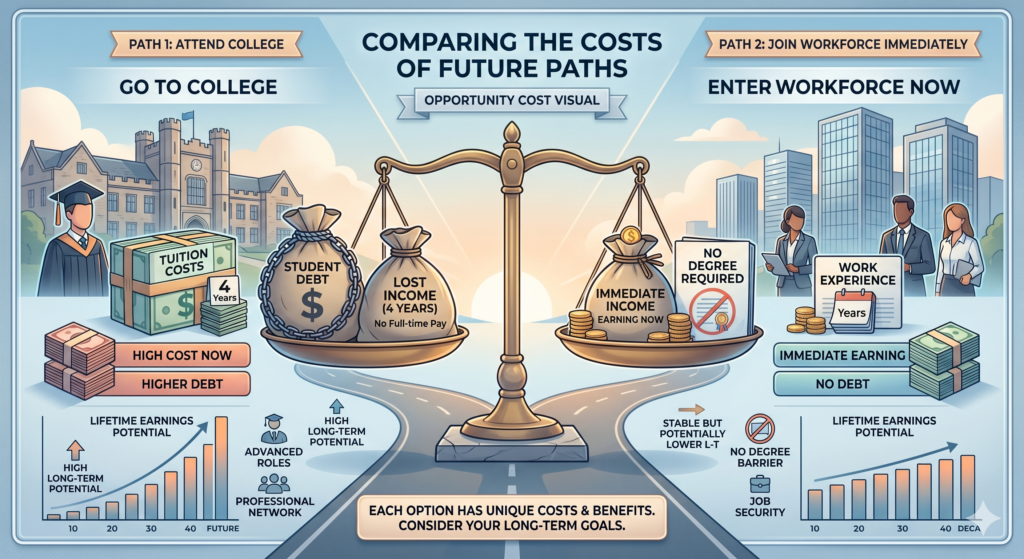
When economists talk about the cost of a decision, they are not just talking about the price tag. They are talking about what you give up by making that choice. That is called opportunity cost, and it is one of the most powerful ideas in economics.
Here is a simple example. You have a Saturday free. You could pick up a shift at work and earn $80, or you could go to a friend’s birthday party. If you go to the party, the opportunity cost is the $80 you did not earn. If you take the shift, the opportunity cost is the experience and connection you missed at the party.
The dollar amount did not show up on any price tag. But it was absolutely a cost.
Now scale that up to one of the biggest decisions of your life. Should you go to college or go straight into the workforce after high school?
If you go to college, you are paying tuition, yes. But you are also giving up four years of potential full-time income. That lost income is part of the real cost of your education, even though nobody bills you for it.
If you skip college and start working, you might earn money now. But you could be giving up higher lifetime earnings, career opportunities, and other long-term benefits that a degree might have unlocked.
Neither choice is automatically right or wrong. But understanding opportunity cost means you are making the decision with your eyes open, accounting for what you are actually giving up, not just what shows up on a price tag or a paycheck.
Trade-offs Are Everywhere
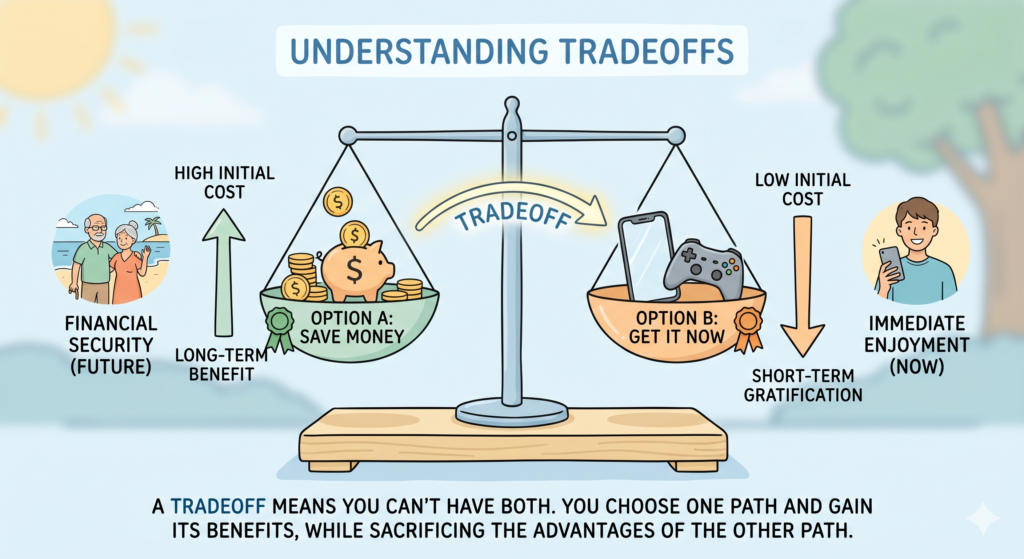
Every budget decision is a trade-off. You have $200 for the month after your fixed expenses. You could spend it on going out with friends, save it, put it toward a new laptop, or use it to pay down debt. Whatever you choose, you are giving something else up. That is a trade-off.
Governments face trade-offs too. Every dollar spent on one program is a dollar not spent on another. More money for road construction might mean less money for education funding. More tax cuts might mean less spending on public services.
The point is not to stress you out about every decision. The point is to recognize that choices have costs beyond what is visible on the surface. The more clearly you see those costs, the better your decisions will be.
Closing Thought
Every price tag you have ever looked at, every job you will ever apply for, every loan you will ever consider, every political debate you will ever hear about taxes or spending or trade, all of it runs on economic principles.
Scarcity is real. Choices have costs beyond their price tags. Markets respond to incentives in predictable ways. Governments step in when markets fall short. Economies rise and fall in cycles. And every personal financial decision you make is a small piece of a much larger system.
Economics is not a subject you study and forget. It is the operating system running underneath your financial life, the job market you are entering, the prices you pay every day, and the policy debates that will shape the world you live in for decades to come.
Understanding it does not just make you a better student. It makes you a smarter, more empowered person.
And that is worth a lot more than any price tag.
6.3: Supply and Demand: The Engine of the Economy
If there is one concept that people think of when they hear the word economics, it is supply and demand. And for good reason. Supply and demand explains more about why prices are what they are than almost any other single idea.
Let’s break it down simply.
Demand: What People Want to Buy
Demand refers to how much of something consumers are willing and able to buy at various price points. The key word there is “able.” Want does not equal demand in economics. Demand requires both the desire for something and the ability to pay for it.
Here is the core principle: when prices go up, demand typically goes down. When prices go down, demand typically goes up. This is called the law of demand, and it makes intuitive sense. If your favorite restaurant doubles its prices overnight, you are going to go there less. If it cuts prices in half, you are probably going more often.
But price is not the only thing that drives demand. Several other factors matter too.
Consumer income matters. When people have more money, they tend to buy more of most things. When money is tight, spending pulls back.
Tastes and trends matter. Remember when everyone suddenly needed a Stanley cup? That was a shift in consumer taste driving up demand with no change in price.
The price of related goods matters too. If the price of beef skyrockets, demand for chicken tends to go up as people substitute one for the other.
Supply: What Businesses Are Willing to Sell
Supply refers to how much of something producers are willing and able to offer for sale at various price points. The core principle here is the opposite of demand: when prices go up, producers typically want to supply more. Higher prices mean higher potential profits, so businesses have more incentive to produce.
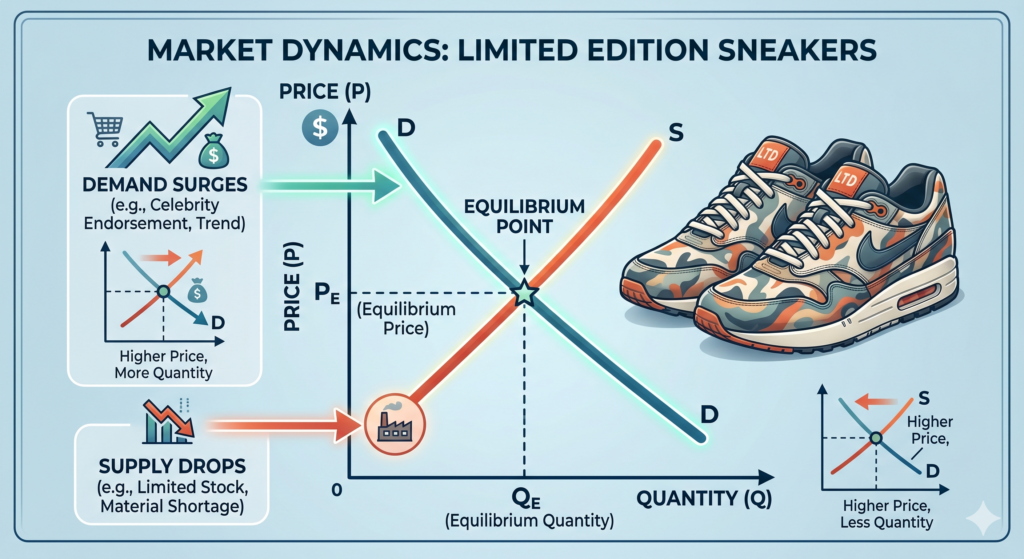
Think about sneaker launches. When a limited-edition Air Jordan sells out immediately and resale prices shoot up to $400, what happens? Nike takes note. They start producing more of that style. Other brands rush to create similar products. Supply responds to the signal that prices are high and demand is strong.
Several factors affect supply beyond price. The cost of production matters enormously. If the raw materials needed to make a product get more expensive, it costs more to produce that product, and supply may shrink. Technology matters too. Better technology usually makes production cheaper and more efficient, which tends to increase supply. And the number of sellers in the market matters. More competition typically means more supply.
Example
How Supply and Demand Work Together
Supply and demand do not operate independently. They interact constantly, and that interaction determines prices.
When the amount consumers want to buy exactly equals the amount producers want to sell, the market is in equilibrium. The price at that point is called the equilibrium price, and it is essentially the price the market settles on naturally when left to function freely.
But markets are always shifting.
When demand exceeds supply, prices rise. When supply exceeds demand, prices fall. That relationship plays out in every market, every day, whether you are buying sneakers, streaming subscriptions, gasoline, or groceries.
More Quick Real-World Examples
Concert tickets. An artist announces a tour. Millions of fans want tickets. There are only so many seats in the venue. Supply is fixed and low. Demand is massive. Price goes up, sometimes dramatically.
Gas prices. Oil producing countries reduce output. Less oil means less gasoline. Supply drops. With the same number of drivers on the road, demand stays constant. Price at the pump rises.
Streaming services. When Netflix was the only major streaming platform, it had near-total control. As Disney Plus, HBO Max, Peacock, and others launched, supply of streaming options increased dramatically. Prices have had to stay competitive because consumers now have alternatives.
6.4: Types of Economic Systems
Every country in the world has to answer the same fundamental economic questions.
What gets produced?
How much of it gets made?
Who gets to have it?
How is it distributed?
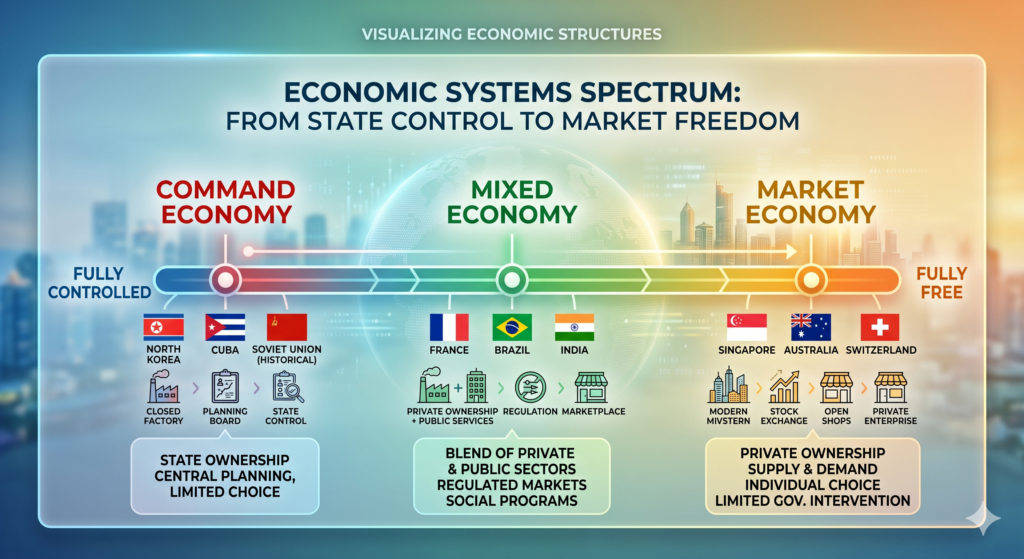
The answer to those questions depends on what kind of economic system a country uses. There are three basic types, and most real countries fall somewhere in between them.
Command Economy
In a command economy, the government makes the major economic decisions. The government decides what gets produced, how much of it gets made, and who gets it. Private ownership is limited or nonexistent. Businesses do not compete for customers the way they do in a free market, because the government controls the means of production.
A command economy tries to use resources for everyone, instead of just a few wealthy people. However, in reality, these economies often have trouble with inefficiency, shortages, and a lack of new ideas because there’s no competition to encourage improvement.
North Korea is one of the most extreme examples of a command economy operating today. Cuba and, historically, the Soviet Union are other examples.
Market Economy
In a pure market economy, economic decisions are made by individuals and businesses through the forces of supply and demand, with little to no government involvement. Prices are set by the market. Businesses compete for customers. People are free to buy, sell, and start companies as they choose.
The driving force in a market economy is the profit motive. Businesses produce what consumers want because doing so is profitable, and they stop producing things nobody wants because there is no money in it. In theory, this creates an efficient system that naturally directs resources toward what people value most.
No country operates a perfectly pure market economy. But the United States, Canada, and most of Western Europe lean heavily in this direction.
Mixed Economy
A mixed economy combines elements of both. The market drives most economic activity, but the government steps in to regulate certain industries, provide public goods and services, and address situations where the free market produces unfair or harmful outcomes.
The United States is a mixed economy. Most goods and services are produced by private businesses competing in the market. But the government also funds public schools, builds highways, regulates food safety, sets minimum wage laws, and provides social programs like Social Security and Medicaid. The mix of government and market varies from one country to another and is often the source of significant political debate.
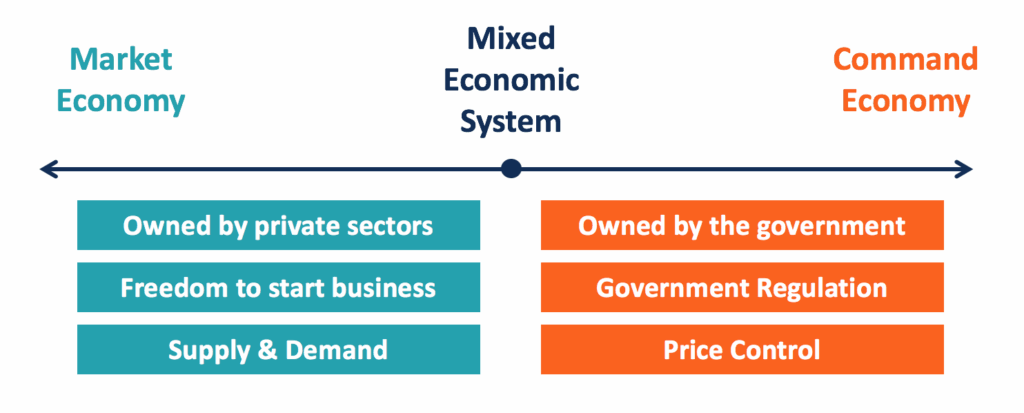
Market Vs Mixed Vs Command Economies Explained | What is the difference between Market Mixed Command
6.5 Competition and Market Structures
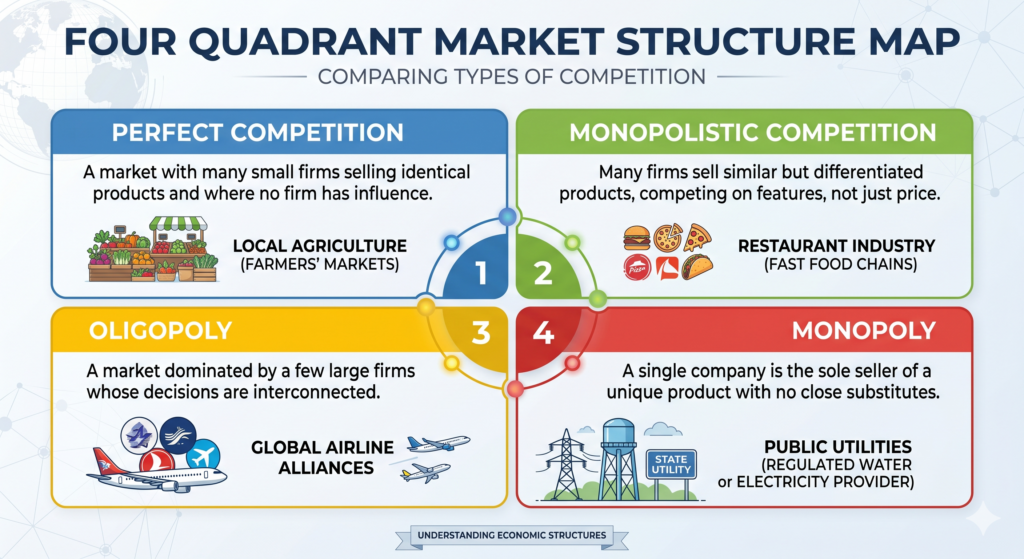
Not all markets work the same way. The level of competition in a market has a huge effect on prices, quality, and consumer choice. Economists describe market competition using four basic structures.
Perfect Competition
In a perfectly competitive market, there are many sellers offering identical products, prices are determined entirely by supply and demand, and no single seller has any real power to influence the market. Entry and exit are easy, meaning new businesses can join the market without major barriers.
Perfect competition is mostly a theoretical concept. The closest real-world examples tend to be commodity markets like wheat, corn, or crude oil, where the product is essentially identical regardless of who produces it, and no single producer controls the price.
Monopoly
At the opposite extreme is a monopoly, where a single seller controls the entire market for a product or service. With no competition, a monopoly can set prices as high as it wants, knowing consumers have no alternative.
Monopolies are generally considered harmful to consumers because they lead to higher prices and lower quality. That is why governments in most countries have laws designed to prevent monopolies from forming or to regulate them when they do.
A classic example is utility companies. In most cities, there is one electric company, one water provider, and one natural gas supplier. You cannot choose a competing provider. Because of this, the government regulates what those companies can charge.
Oligopoly
An oligopoly exists when a small number of large companies dominate a market. Each company is big enough that its decisions affect the others, so they pay close attention to what their competitors are doing.
You interact with oligopolies constantly. The airline industry is a good example. A handful of major carriers, American, Delta, United, Southwest, control the vast majority of domestic flights. The smartphone market is another. Essentially two companies, Apple and Google through Android, power almost every phone on the planet.
In an oligopoly, competition exists but it is limited. Prices tend to be similar across companies because no one wants to start a price war they might lose. Competition tends to happen more through product features, marketing, and customer experience than through price alone.
Monopolistic Competition
Monopolistic competition is the structure most similar to your everyday consumer experience. There are many sellers, but each one offers a product that is at least slightly different from the others. Businesses compete on price, quality, branding, and experience.
Think about coffee shops. There are dozens of them in most cities, ranging from massive chains like Starbucks to small independent cafes. They all sell coffee, but each one is differentiated by its brand, atmosphere, menu, and experience. A customer who prefers the vibe of a local indie shop might pay more there than they would at a chain. That differentiation gives each seller some control over their pricing.
Restaurants, clothing brands, hair salons, and gyms all tend to operate in monopolistically competitive markets.
6.6 The Role of Government in the Economy
Even in a market-driven economy like the United States, the government plays a significant role. And understanding why governments get involved in the economy in the first place helps make sense of a lot of policy debates you will hear throughout your life.
Why Government Gets Involved
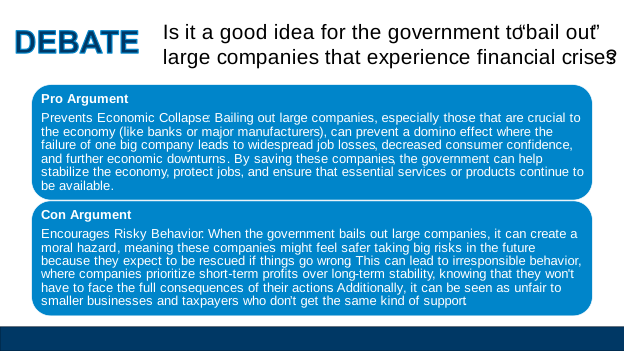
The free market is remarkably good at allocating resources efficiently in many situations. But it does not always produce outcomes that are fair, safe, or beneficial for society as a whole. That is where government steps in.
In return, the companies had to restructure, cut costs, and repay the loans. Over time, the auto industry recovered, and the government eventually got most of its money back, although the bailout was controversial at the time.
There are a few situations where most economists agree government involvement makes sense.
Public goods are things that everyone benefits from but that the market would not provide on its own because there is no profit in it. National defense, public roads, clean air regulations, and public street lighting are examples. No private company is going to build a highway system and give everyone free access to it. The government does it because society benefits even though it is not profitable.
Externalities happen when the actions of individuals or businesses create costs or benefits for others who had no say in the decision. Pollution is the classic example of a negative externality. A factory that dumps chemicals into a river benefits from lower production costs, but everyone who lives downstream bears a cost they never agreed to. Government regulations exist to address these kinds of situations.
Market failures occur when the free market produces outcomes that are inefficient or harmful. Monopolies are a form of market failure, as are situations where one party in a transaction has dramatically more information than the other, like a used car dealer who knows far more about a vehicle’s problems than the buyer does.
Taxes, Spending, and Fiscal Policy
The government influences the economy primarily through two tools: taxation and spending. Together, these make up what economists call fiscal policy.
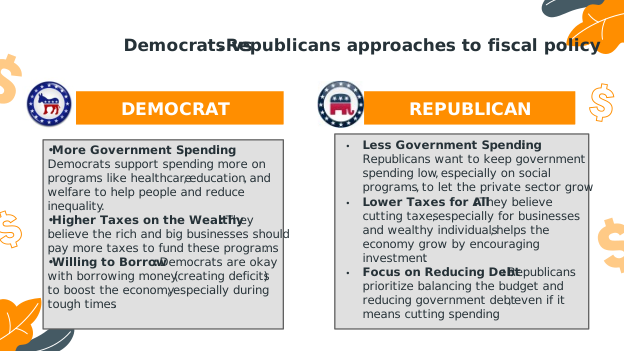 When the government collects taxes, it pulls money out of the private economy. When it spends money on programs, infrastructure, and services, it puts money back in. The balance between the two has significant effects on economic activity.
During a recession, when the economy is shrinking and people are losing jobs, the government often increases spending and cuts taxes to stimulate economic activity and put more money in people’s hands. During periods of strong growth when inflation is a concern, the government may do the opposite.
A relatable example: the stimulus checks sent out during the COVID-19 pandemic were a form of fiscal policy. The government injected money directly into the economy to keep people spending and prevent an even deeper economic collapse.
WONDERING WHERE YOUR TAX DOLLARS GO?
Federal Spending Breakdown
-
Healthcare (Medicare & Medicaid):25%
-
Social Security:22%
-
National Defense:13%
-
Interest on National Debt:13%
-
Safety Net Programs:9% (includes unemployment, nutrition assistance, etc.)
-
Education & Infrastructure:6%
-
Other:12% (includes science, international affairs, justice, and general government administration)
6.7 Macroeconomics: The Big Picture
So far we have talked mostly about individual decisions and specific markets. Now let’s zoom out and look at the economy as a whole.
Macroeconomics studies the big-picture forces that affect entire countries, including how fast the economy is growing, how many people have jobs, and how much prices are rising over time.
Three concepts are absolutely essential to understanding macroeconomics: GDP, unemployment, and inflation.
GDP: Keeping Score on the Economy
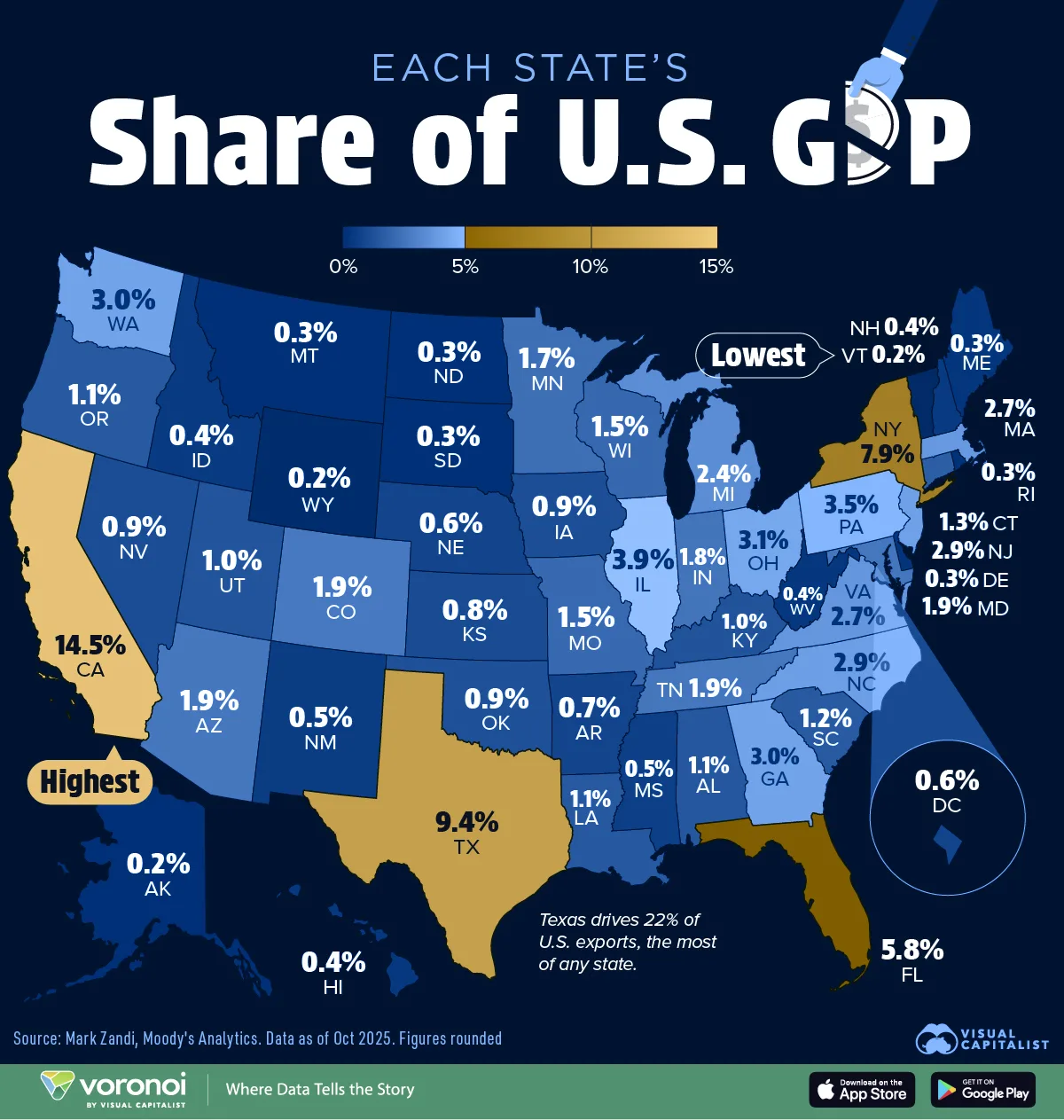
GDP stands for Gross Domestic Product, and it is the most widely used measure of how well an economy is doing. Simply put, GDP is the total dollar value of all goods and services produced within a country in a given period of time, usually measured by year or by quarter.
When GDP is growing, it generally means businesses are producing more, people are working and spending, and the economy is healthy. When GDP is shrinking, it usually means the opposite. Two consecutive quarters of declining GDP is the technical definition of a recession, and the most common indicator (although there are other factors considered, i.e: unemployment and job growth).
Think of GDP like the scoreboard for the entire economy. It does not tell you everything, but it gives you a quick read on whether things are generally moving in the right or wrong direction.
The United States has generated the largest GDP in the world for over 130 years. That number reflects the enormous volume of economic activity happening across every industry in the country every single day.
Unemployment: Who Is Working and Who Is Not
The unemployment rate tells us what percentage of people who want to work and are actively looking for a job cannot find one. It is one of the most watched economic indicators because employment affects not just individuals but the entire economy. When people have jobs, they earn money and spend it, which keeps businesses running and the economy moving.
Inflation: Why Your Dollar Buys Less Than It Used To
Inflation is the general rise in prices over time. A little inflation is normal and even healthy in a growing economy. But when inflation rises too quickly, it erodes the purchasing power of money, meaning the same dollar buys less than it did before.
Here is a concrete illustration. In 2000, the average price of a movie ticket in the United States was about $5.39. By 2024, the average was over $13. The movie did not get three times better. Your dollar just got weaker relative to everything it buys.
6.8 Personal Economics: What This Means for You
Everything we have covered in this chapter, scarcity, opportunity cost, supply and demand, inflation, shows up in your personal financial life whether you are thinking about it or not. This final section is about making those connections explicit and giving you a framework for making smarter decisions with the money you have right now.
Your Budget Is an Economics Problem
Every dollar you have is a scarce resource. There is a limited amount of it, and there are unlimited things you could spend it on. That means every spending decision you make is also a decision not to spend that money on something else. Opportunity cost is built into every purchase.
A simple monthly budget forces you to confront that reality head on. When you can see that you are spending $180 a month on eating out and only putting $20 into savings, the opportunity cost of those meals becomes visible.
That is not a judgment. It is information. And information is what good decisions are built on.
Interest Rates and the Cost of Borrowing
One of the most important economic concepts you will encounter in your personal financial life is the interest rate, which is the cost of borrowing money. When you take out a student loan, a car loan, or eventually a mortgage, you are not just paying back what you borrowed. You are paying back what you borrowed plus interest, which is essentially the price you pay for the ability to use money you do not yet have.
Interest rates are expressed as a percentage. A $10,000 student loan at a 6 percent annual interest rate will cost you significantly more than $10,000 by the time you pay it off, depending on how long the repayment takes. The longer you take to repay a loan, the more interest accumulates, and the more expensive the original loan becomes.
This is why understanding interest rates matters so much. A car that costs $25,000 financed over six years at a high interest rate might end up costing you $32,000 or more by the time your last payment clears. The sticker price is not the real price. The real price includes the cost of borrowing.
Student Loans: The Economics of Your Education
Student loans are one of the most significant financial decisions many young people make, often without fully understanding what they are signing up for.
Here is the economic reality. When you borrow money to pay for college, you are making a bet on your future earning potential. The assumption is that the degree will increase your income enough over your lifetime to more than cover the cost of the loan plus interest. For many careers and degree paths, that bet pays off. For others, the math is tighter or harder to make work.
This does not mean college is not worth it. For most people in most fields, it still is. But it does mean that treating your education as an economic investment, thinking carefully about what you are studying, what careers it leads to, what those careers pay, and how much debt you are taking on to get there, is not cynical. It is responsible.
EXAMPLE: The Subprime Mortgage Loan
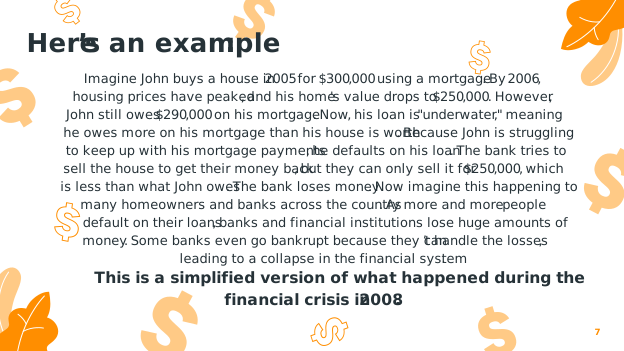
A subprime mortgage loan is a type of loan given to people who have a lower credit score or a less reliable financial history. Because these borrowers are seen as higher risk, the loans often come with higher interest rates.
In very basic terms, it’s like lending money to someone who might have a harder time paying it back. Because the lender is taking a bigger risk, they charge more in interest. However, these loans can be risky for both the borrower and the lender because if the borrower can’t pay back the loan, they might lose their home, and the lender could lose money.
Understanding Economics Makes You Harder to Fool
Here is the big takeaway from this section and really from this entire chapter. Economics is not just something that happens to you. It is something you participate in every single day, whether you understand it or not.
When you understand how supply and demand work, you are less likely to get manipulated by artificial scarcity or fake urgency in marketing. When you understand inflation, you can make smarter decisions about saving and investing. When you understand the business cycle, you can make better decisions about timing big financial moves. When you understand opportunity cost, you make decisions with a clearer picture of what you are actually choosing between.
You do not need to be an economist to benefit from understanding economics. You just need to understand it well enough to apply it to the decisions already in front of you.
Closing Thought
Every price tag you have ever looked at, every job you will ever apply for, every loan you will ever consider, every political debate you will ever hear about taxes or spending or trade, all of it runs on economic principles.
Scarcity is real. Choices have costs beyond their price tags. Markets respond to incentives in predictable ways. Governments step in when markets fall short. Economies rise and fall in cycles. And every personal financial decision you make is a small piece of a much larger system.
Economics is not a subject you study and forget. It is the operating system running underneath your financial life, the job market you are entering, the prices you pay every day, and the policy debates that will shape the world you live in for decades to come.
Understanding it does not just make you a better student. It makes you a smarter, more empowered person.
And that is worth a lot more than any price tag.
Extra Learning Resources: