Main Body
10 CH 10 – OSM

INTRODUCTION
Think About This…
Picture this: you are in charge of planning a dinner for 10 people. You have $100, a list of dietary restrictions, and exactly two hours. You need to make sure everyone gets enough food, nothing runs out, and the meal is actually good. Simple, right?
Not quite. You have to figure out what to cook, where to buy ingredients, how much everything costs, who is doing what in the kitchen, and how to time it all so everything is ready at once. One wrong call and you are either out of money, out of food, or serving cold pasta to a very unhappy table.
That juggling act, planning, budgeting, timing, coordinating, and delivering a quality result, is Operations Management in action. Every business faces the same challenge, just at a much larger scale.
CHAPTER OUTLINE
10.1: What is operations management?
- Definition and purpose
- Creating value for customers
- Impact on revenues, costs, and profitability
- The role of the operations manager
- Core responsibilities overview
10.2: Key responsibilities of operations managers
- Planning and strategy
- Process management
- Quality control
- Supply chain management
- Workforce management
- Cost control and budgeting
- Technology and innovation
- Customer satisfaction
10.3: How operations management has evolved
- From efficiency to effectiveness
- From goods to services
- From mass production to mass customization
- From local to global competition
- From simple to complex supply chains
- Lean thinking and green practices
10.4: What operations managers actually do
- Designing products and services
- Process selection and facility layout
- Facility location decisions
- Inventory control
- Project scheduling
- Designing and managing value chains
- Outsourcing vs. vertical integration
- Offshoring
10.5: Operations in a service-based economy
- The servicescape
- Ambient conditions and functionality
- Managing demand variability
10.6: Technology in operations
- Automation and robotics
- CAD and CAM software
- Computer-integrated manufacturing (CIM)
- Computer-aided engineering (CAE)
- AI and emerging tech trends
- The Deming Chain Reaction
- Total Quality Management (TQM)
- Six Sigma
- Baldrige National Quality Program
- ISO 9000 standards
10.1: What is operations management?
Operations management (OSM) is the process of planning, organizing, and overseeing the activities required to produce goods and deliver services.
At its core, OSM is how businesses create and deliver what they sell. It is everything that happens behind the scenes to make sure a product or service gets to the customer the right way, at the right time, and at the right cost. Every product you buy, every service you use, every app that loads smoothly on your phone, there is an operations team somewhere making sure that happens efficiently. The goal is simple: deliver the right product or service, at the right quality, at the right time, and at the lowest reasonable cost.
It matters because it directly affects:
- How much a business spends
- How much it earns
- Whether customers are happy
Creating Value for Customers
Operations management is about much more than producing products efficiently. Its ultimate purpose is to create value for customers. Value is created when a business provides products or services that meet customer needs while balancing quality, speed, convenience, and price.
Customers may never see the production process, but they immediately notice when operations are successful. Fast shipping, accurate orders, fresh food, reliable technology, and excellent customer service are all examples of effective operations management creating value.
Why Operations Management Matters
Operations decisions have a direct impact on nearly every aspect of a business.
Effective operations management can:
- Reduce operating costs by eliminating waste and improving efficiency.
- Increase revenue by delivering products and services customers want.
- Improve profitability by balancing costs with customer value.
- Increase customer satisfaction through quality, speed, and reliability.
- Create a competitive advantage over other businesses.
Because operations influences both expenses and customer satisfaction, it is one of the most important drivers of long-term business success.
The Role of the Operations Manager
Operations managers are responsible for ensuring that an organization’s daily activities run efficiently and effectively. They coordinate people, technology, equipment, inventory, suppliers, and processes to ensure products and services are delivered successfully.
Think of an operations manager as the conductor of an orchestra. Every department has its own role, but the operations manager helps ensure everything works together smoothly.
Some common responsibilities include:
- Planning production and daily operations
- Managing inventory and supply chains
- Monitoring quality standards
- Improving business processes
- Scheduling employees and resources
- Controlling costs
- Solving operational problems
- Continuously seeking ways to improve efficiency and customer satisfaction
Although the specific responsibilities vary by industry, the overall goal remains the same: deliver value to customers while using the organization’s resources as effectively as possible.
A good operations manager is sometimes called an “efficiency whisperer.” Their job is to make things run smoothly without wasting time, money, or resources.
Efficiency vs. Effectiveness: What Is the Difference?
Efficiency: Producing output or achieving a goal at the lowest possible cost. Doing things right. Effectiveness: Using resources to create real value for customers by offering products and services that are genuinely worth paying for. Doing the right things. The best operations managers pursue both. A company that is highly efficient but making the wrong product is still failing its customers. |
10.2: Key responsibilities of operations managers
What Does an Operations Manager Actually Do?
Operations management is not a single job; it is a collection of responsibilities that touch nearly every part of a business. Depending on the industry, the role looks different, but the core areas are consistent.
Planning and Strategy
Operations managers are responsible for developing the strategies that keep a business on track. This means forecasting demand (how much product will customers want next month?), allocating resources, and building plans that connect day-to-day activities to the company’s bigger goals.
Real-World ExampleA clothing retailer like Zara plans production months in advance, but also builds flexibility into its supply chain so it can respond to new trends in as little as two weeks. That kind of planning is what makes fast fashion work. |
Process Management
Processes are the steps a business takes to turn inputs (raw materials, labor, information) into outputs (finished products or services). Operations managers design and oversee these processes to make sure they are as smooth and waste-free as possible.
A poorly designed process creates bottlenecks, delays, and extra costs. A well-designed one gives a company a real competitive edge.
Quality Control
No one wants a product that breaks after one use or a service that fails to deliver on its promises. Quality control means making sure that what leaves the factory or the service desk meets a consistent standard.
This is not just about catching defects at the end. Modern operations management focuses on building quality into every step of the process, so problems are caught early rather than after the damage is done.
Supply Chain Management
Getting a product to a customer involves a lot more than just making it. Raw materials have to be sourced, components have to be shipped, products have to be assembled, and then everything has to be distributed to the right places. Operations managers coordinate all of this.
Workforce Management
People are one of the most important resources in any operation. Operations managers recruit, train, and supervise the employees who do the actual work. They also manage schedules, set performance expectations, and look for ways to keep the team running at its best.
Cost Control and Budgeting
Every business has a budget, and operations managers are responsible for making sure their departments stay within it. This means tracking costs, cutting waste wherever possible, and finding smarter ways to use resources without compromising quality.
Technology and Innovation
Technology is reshaping operations at every level, from automated warehouses to AI-powered demand forecasting. Operations managers need to stay current with what is available, and know when adopting a new tool will genuinely improve the way things work.
Customer Satisfaction
Ultimately, all of these responsibilities connect back to one thing: making sure the customer gets what they need, when they need it, at a quality they are happy with. Operations managers monitor customer feedback and adjust processes when something is not working.
Real-World ExampleThink about ordering a pizza from Domino’s. The company’s famous tracker lets you follow your order from the oven to your door. That is not just a fun feature; it is operations management making the process visible and accountable at every step. |
10.3: How operations management has evolved
Operations management has changed dramatically over the past 50 years. Here are the biggest shifts that have shaped the field into what it is today:
From Efficiency to Effectiveness
Earlier approaches to operations were almost entirely focused on squeezing out costs, producing as much as possible with as few resources as possible. That still matters, but modern operations management puts much more emphasis on creating genuine value for the customer, not just minimizing expenses.
Real-World ExampleA fast-food restaurant in the 1970s was optimized purely for speed and volume. Today, chains like Chipotle have built their operations around freshness, customization, and transparency about ingredients. The goal is not just fast food; it is food customers actually feel good about eating. |
From Goods to Services
For most of the 20th century, operations management was closely tied to manufacturing. The focus was on factories, machines, and physical products. Over time, developed economies shifted heavily toward services, and operations management had to shift with them.
Goods: Physical products you can see and touch. These are divided into durable goods (lasting three or more years, like cars and appliances) and non-durable goods (consumed quickly, like food and cleaning supplies).
Services: Intangible activities that provide benefits without resulting in a physical product. Think haircuts, banking, streaming, or healthcare.
Real-World ExampleIBM started as a hardware company selling computers. Today, it earns most of its revenue from IT consulting, cloud computing, and managed services. The product is no longer a box you can hold; it is expertise and outcomes delivered over time. |
From Mass Production to Mass Customization
Henry Ford’s assembly line was built on one idea: making a lot of one thing very cheaply. That worked for decades. But customers started wanting more choices, and technology eventually made it possible to deliver them without sacrificing efficiency.
Today, mass customization allows companies to produce personalized products at scale. Instead of picking from what is on the shelf, customers can configure their own version of a product.
Real-World ExampleNike By You lets customers design their own shoes, choosing colors, materials, and even adding personal text. Each pair is unique, but Nike’s operations are efficient enough to make it work without charging a premium that scares people away. |
From Local to Global Competition
A few decades ago, most businesses competed primarily with other companies in the same city or country. Globalization and the internet changed that permanently. A small business in Ohio now competes with suppliers in Vietnam, software companies in India, and retailers based anywhere in the world.
This has raised the stakes significantly. Businesses can no longer rely on geography to protect them from competition. They have to earn their customers every single time.
Real-World ExampleStreaming services like Netflix operate globally and compete with local broadcasters, rival streaming platforms, and even user-generated content on YouTube, all at once. Their operations have to be optimized for delivery in dozens of countries and dozens of languages simultaneously. |
From Simple to Complex Supply Chains
Traditional supply chains were fairly linear. A manufacturer bought materials, made a product, and sold it. That has become far more complex. Modern supply chains involve dozens of partners, multiple countries, real-time logistics tracking, and a whole ecosystem of technology to keep it all coordinated.
This is often referred to as a value chain, which goes beyond just the flow of goods to include information, finances, and relationships at every stage.
Real-World ExampleApple‘s supply chain spans over 50 countries. Components like chips, glass, and rare metals come from dozens of specialized suppliers around the world before being assembled, primarily in China, and then shipped globally. Coordinating all of that is itself a massive operations challenge. |
Lean Thinking and Green Practices
Lean production is a philosophy focused on doing more with less. The idea is to eliminate anything that does not add value, whether that is wasted materials, unnecessary steps, or idle time. Lean thinking originated in manufacturing but has spread to healthcare, software, and services.
Green practices push this further by asking not just whether a process is efficient for the business, but whether it is sustainable for the planet. The long-term goal of many green initiatives is sustainability: meeting today’s needs without compromising the ability of future generations to meet theirs.
Real-World ExamplePatagonia has built its entire brand around sustainable operations. The company uses recycled materials, runs repair programs to extend the life of its products, and openly advocates for environmental causes, even when it costs short-term profits. Their operations are designed around a long-term view of value, not just quarterly earnings. |
10.4 What operations managers actually do
The Core Functions of Operations Management
Beyond managing people and processes, operations managers are responsible for several specific functions that shape how a business operates day to day.
Process Selection and Facility Layout
Before a product can be made or a service delivered, someone has to decide how it will be done and where. Process selection involves choosing the best production or delivery method. Facility layout involves physically arranging the space, equipment, and workstations to support that method.
A poor layout creates unnecessary movement, slows things down, and increases costs. A well-designed layout streamlines everything.
Real-World ExampleThink about the layout of a Starbucks store. The espresso machines, blenders, and refrigerators are all placed in a specific sequence that matches the order in which drinks are made. The register faces the door so customers can order quickly. The pickup area is separate from the ordering area to reduce congestion. None of that is accidental. |
Facility Location
Where a business sets up shop matters enormously. Location decisions are influenced by factors like customer proximity, transportation access, land and labor costs, supplier availability, and local tax incentives.
The right factors vary depending on the industry. A manufacturing plant might prioritize proximity to raw materials and low land costs. A retail store needs to be where the customers are.
Real-World ExampleAmazon strategically places its fulfillment centers near major population hubs so it can offer same-day or next-day delivery to as many customers as possible. The location of those warehouses is a direct operations decision with a huge impact on customer experience. |
Inventory Control: Knowing When to Hold Them
Inventory refers to the stock of goods or materials an organization holds. Managing inventory well is critical to both customer satisfaction and profitability.
Too little inventory means stockouts, lost sales, and frustrated customers. Too much inventory ties up cash, increases storage costs, and raises the risk of products becoming outdated or spoiling.
The goal is to find the right balance, holding enough to meet demand without holding so much that it becomes a liability.
Real-World ExampleDuring the early days of the COVID-19 pandemic, grocery stores across the U.S. found themselves with only about 87 percent of their usual inventory. The sudden shift from eating out to cooking at home created a wave of demand that supply chains simply were not prepared for. Empty shelves are a very visible example of inventory management failure. |
Project Scheduling
Operations managers use scheduling tools to plan and track the activities needed to complete a project or production run. This means coordinating who does what, in what order, by when, so that deadlines are met and resources are not wasted sitting idle between steps.
In large organizations, this can involve hundreds of overlapping tasks, teams in different time zones, and tight deadlines. Project scheduling tools help operations managers keep all of that organized.
Real-World Example: Sherwin-Williams HeadquartersWhen Sherwin-Williams built its new 36-story headquarters in downtown Cleveland, project managers had to schedule everything from excavation and foundation work to steel installation, electrical work, interior construction, inspections, and eventually moving thousands of employees into the building. Many activities could not begin until others were completed. Project scheduling helped ensure that workers, equipment, and materials were available at the right time and that delays in one activity did not derail the entire project. Official project timeline and construction progress page with photos |
Designing and Managing Value Chains
A value chain is the full network of activities, organizations, and resources involved in creating a product or service and delivering it to the customer. Every step in the chain should add value. If a step does not, it is a candidate for elimination or redesign.
Operations managers need to make key decisions about how the value chain is structured. Two of the most important decisions involve the trade-off between doing things in-house and bringing in outside help.
- Vertical integration means taking on processes that were previously handled by other organizations in the supply chain. A coffee company that starts growing its own beans is vertically integrating upstream. This gives more control but requires more investment.
- Outsourcing is the opposite: handing off certain functions to outside organizations. A company might outsource its customer service, logistics, or IT support to specialists. This can reduce costs and free up internal resources, but it means giving up some control.
Real-World ExampleStarbucks‘s value chain starts with coffee farmers in Brazil, Colombia, and Ethiopia. The beans are shipped to roasting facilities, then distributed to stores worldwide. Each step, sourcing, roasting, packaging, distribution, and customer service, adds value to the final cup. Starbucks manages some of these steps directly and partners with outside organizations for others. |
Offshoring
Offshoring refers to moving certain business processes or operations to another country, typically to reduce costs. Companies often offshore manufacturing, customer service, or IT functions to countries where labor and production costs are lower.
Offshoring is not without controversy. Critics point to the loss of domestic jobs, while supporters argue it allows companies to remain competitive and keep prices affordable for consumers.
Real-World ExampleApple‘s iPhones are assembled in China, primarily by a company called Foxconn. Apple does this because labor costs are lower and because many of the component suppliers are already located nearby, making the process more efficient. The design happens in California; the manufacturing happens overseas. |
10.5: Operations in a service-based economy
We now live in an economy where services make up a larger share of what businesses offer than physical goods do. Managing operations for services comes with unique challenges, and one of the most interesting concepts to understand is the servicescape.
The Servicescape
The servicescape is the physical environment in which a customer and service provider interact. It includes everything from the lighting and music to the layout of the space and the signs on the walls. It might sound superficial, but the servicescape has a measurable impact on how customers feel about a service.
A well-designed servicescape does three things:
- Ambience: Lighting, temperature, scent, sound, and decor all shape the mood of the space.
- Functionality: The layout should make it easy for customers to move through the space and find what they need.
- Signs, Symbols, and Artifacts: Visual elements like logos, color choices, and directional signs communicate the brand’s identity and help customers navigate.
Real-World ExampleStarbucks is a textbook example of a carefully designed servicescape. The warm lighting, the smell of fresh coffee, the soft background music, and the comfortable seating are all intentional. The goal is to make you want to stay, and ideally, to order something else while you are there. |
One unique challenge in service operations is that you cannot make a service in advance and store it. A haircut cannot be produced ahead of time and put on a shelf. This creates real operational problems when demand spikes, think of a restaurant on a Saturday night versus a Tuesday afternoon. Managing that variability is one of the trickiest parts of service operations.
10.6: Technology in Operations
Technology has transformed operations management more than almost any other force. From factory floors to logistics networks to customer service desks, automation and software have made processes faster, cheaper, and more consistent.
Automation and Robotics
Automation means replacing human control of machinery and equipment with programmed systems. Robots take this further, acting as reprogrammable machines that can handle materials, tools, and specialized tasks across a wide range of jobs.
Modern robots can see, hear, and feel their environments through sensors. Many are mobile and can navigate complex physical spaces. They are especially useful for tasks that are repetitive, dangerous, physically demanding, or require a level of consistency that humans simply cannot maintain over long shifts.
Real-World ExampleAmazon’s fulfillment centers use thousands of robots to move shelves of products to human workers, dramatically speeding up the picking and packing process. The robots handle the physical movement; humans handle the tasks that still require judgment. The result is a warehouse that operates far faster than a purely human workforce could manage. |
Software Technologies
CAD (Computer-Aided Design): Software that allows engineers and designers to create and edit detailed drawings and blueprints digitally, including 3D models. This replaces the old method of drawing everything by hand.
CAM (Computer-Aided Manufacturing): Software that takes a digital design and generates the precise instructions needed to manufacture it using automated equipment and robots.
CIM (Computer-Integrated Manufacturing): A system that combines CAD and CAM with flexible manufacturing technology to automate almost the entire design-to-production process.
CAE (Computer-Aided Engineering): Software that lets engineers test and analyze their designs virtually, identifying flaws before anything is physically built. This saves enormous amounts of time and money.
Real-World ExampleCar manufacturers like Ford use CAD to design new vehicle models, CAE to simulate crash tests digitally before building a single prototype, and CAM to program the robots that weld and assemble the cars on the production line. The result is faster development cycles and fewer costly errors. |
AI and Emerging Technology
Artificial intelligence is becoming a major force in operations management. AI systems can analyze enormous amounts of data to predict demand, identify supply chain disruptions before they happen, flag quality issues in real time, and optimize delivery routes automatically.
Real-World ExampleUPS uses an AI-powered system called ORION (On-Road Integrated Optimization and Navigation) to plan delivery routes for its drivers. The system saves the company millions of miles driven per year, reducing fuel costs and emissions while speeding up deliveries. |
10.7: Quality management
Quality is not an accident. It is the result of deliberate systems, consistent standards, and a commitment from everyone in the organization to do things right. Operations management has developed several powerful frameworks for building and maintaining quality.
The Deming Chain Reaction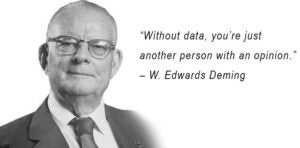
Edwards Deming was a quality management pioneer who introduced a simple but powerful idea: improving quality sets off a chain reaction of positive outcomes throughout a business.
The Deming Chain Reaction is basically a simple cause-and-effect idea:
If you improve quality, everything else gets better.
Here’s the chain in super simple terms:
Better quality
→ fewer mistakes and defects
Fewer mistakes
→ lower costs (less waste, less fixing problems)
Lower costs
→ you can be more efficient and productive
Better products/services
→ more customers choose you
More customers
→ your business grows
Business grows
→ more jobs and long-term success
If a restaurant makes fewer mistakes on orders: They waste less food, customers are happier, more people come back, and the business makes more money. That’s the Deming Chain Reaction in real life.
Real-World ExampleToyota built its reputation on exactly this principle. Its production system, known as the Toyota Production System, focuses relentlessly on quality at every step. Employees are empowered to stop the production line if they spot a defect. The result is one of the most reliable car brands in the world. |
Total Quality Management (TQM)
Total Quality Management (TQM) is an approach to quality improvement that involves everyone in the organization, from the CEO to the newest employee, working toward continuous improvement. The key word is total: quality is not just the responsibility of the quality control department. It belongs to everyone.
The core principles of TQM include a strong customer focus, continuous improvement, employee involvement at all levels, and a commitment to optimizing processes rather than just fixing problems after they occur.
Real-World ExampleToyota’s Kaizen philosophy, which translates roughly to ‘continuous improvement,’ is TQM in practice. Workers at every level are encouraged to suggest small improvements to their work processes. Over time, thousands of small improvements add up to a dramatically better system. |
Six Sigma
Six Sigma is a data-driven approach to quality improvement with very ambitious goals. The name refers to a statistical concept: achieving a level of quality so high that only 3.4 defects occur per million opportunities. In other words, near-perfection.
Six Sigma uses a structured problem-solving process called DMAIC:
- Define the problem
- Measure the current performance
- Analyze the root causes
- Improve by testing solutions
- Control to sustain the improvement
Companies that use Six Sigma train employees in its methods. Those who become experts are called Green Belts or Black Belts, borrowing the language from martial arts to signal levels of expertise.
Real-World ExampleGeneral Electric became one of the most famous adopters of Six Sigma in the 1990s under CEO Jack Welch. The company reported saving billions of dollars by systematically reducing errors and inefficiencies across its manufacturing and service operations. |
Quality Standards and Programs
The Baldrige National Quality Program is a U.S. government-backed initiative that recognizes American organizations for outstanding performance and quality management. Winning the Baldrige Award is considered one of the highest honors a U.S. business can achieve.
ISO 9000 is a family of international standards developed by the International Organization for Standardization. When a company is ISO 9000 certified, it means they have demonstrated that their quality management systems meet an internationally recognized benchmark. This matters especially in global trade, where buyers need assurance that what they are purchasing meets consistent standards regardless of where it was made.
CLOSING
| Back to the Dinner Party
Remember that dinner for 10 people on a $100 budget? Every decision you made, what to cook, where to shop, how to divide the tasks, how to time everything, was an operations decision. You were doing operations management without realizing it. Every business faces the same challenge at a larger scale. Instead of a dinner, it might be 10,000 products. Instead of 10 guests, it might be 10 million customers. But the goal is always the same: deliver the right output, at the right time, with the right resources, without waste. Operations management is what turns ideas into reality. It is the engine behind every smooth customer experience, every product that arrives on time, every service that works exactly as advertised. Whether it is a restaurant, a hospital, a streaming platform, or a global tech company, success depends on how well operations are planned and executed. So the next time something runs seamlessly, your food arrives in 30 minutes, your package shows up the next day, the website loads instantly, remember: that did not happen by accident. That is operations management working exactly as it should. |
Key Terms
Do you love this?
EXTRA LEARNING RESOURCES