Chapter 21 – Career Options in Local Government
21.8 Equity Planning: The Legacy of Norman Krumholz
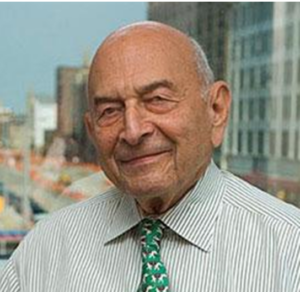
As the Cleveland City Planner during the 1960s, Professor Norman Krumholz confronted the problems of poverty, racism, widespread unemployment, neighborhood decline, and high crime rates. To address these problems, Krumholz introduced an innovative approach to city planning, coined “equity planning”.
He moved away from traditional corporate-focused urban renewal projects to prioritizing the needs of residents, such as affordable housing, public transportation, and quality urban education. “It is not enough for cities to be beautiful and efficient,” he wrote. “They could, and should, be just and fair as well, and planners should work toward human betterment.”
We can define the term equity planning as an approach to city planning that focuses on expanding choices and opportunities for residents who have the fewest choices. In practice, this means considering how development projects affect lower-income and disadvantaged residents and using planning tools, information, and advocacy to expand their opportunities. This approach can influence decisions about housing, transportation, economic development, and public investment.
For example, imagine a transit agency is deciding where to locate a new bus route. A traditional planning approach might focus primarily on where the route would attract the most riders or operate most efficiently. An equity planning approach would also ask which neighborhoods have the fewest transportation options and whether the new route could expand access to opportunities for those residents (e.g., jobs, schools, and health care).
Professor Krumholz’s emphasis on equity planning resonated with city planners across the country. He influenced a generation of public service leaders. He went on to teach for 40 years at Levin College of Urban Affairs at CSU. His influence is particularly evident in his protégé, Chris Ronayne, who currently serves as County Executive of Cuyahoga County. Ronayne recalls Krumholz’s advice: “Get out of the cube and apply yourself because a planner’s place isn’t at a desk. It’s in the community.” Krumholz’s legacy continues through his students and the foundational principles he established in Cleveland.
If you’d like to learn more about the planning professor, contact your professor or Dr. Beth Nagy. Also, check out the school’s BA in community planning and Master of Urban Planning and Development program.
Also, feel free to read Professor Krumholz’s bio in the Encyclopedia of Cleveland History.